
Annual insolvency stats – Yorkshire accountants warn ‘no respite on horizon’
2025 insolvency stats for England and Wales – Azets response
- There were 23,938 corporate insolvencies in 2025 – 0.2% more than in 2024 (23,880) and 4.9% fewer than in 2023 (25,164)
Richard Oddy, a partner, licensed insolvency practitioner and business restructuring, turnaround and rescue expert at accountancy and business advisory group Azets in Yorkshire, said:
“Corporate insolvencies in 2025 are broadly in line with 2024.
“Management teams and business owners are being asked to continue to carefully navigate an extremely volatile and uncertain political, economic and geopolitical environment.
“This pressure is becoming the norm over the medium term, with no respite on the horizon.
“For many, continuing to trade after years of this turbulence is simply becoming too difficult.
“Turnaround options and access to finance are becoming increasingly limited, and key creditors, in particular HMRC, are taking an increasingly tougher stance on chasing down debt.
“Liquidations have continued to make up the overwhelming majority of corporate insolvencies, with Compulsory Liquidations reaching a number not seen in more than 11 years.
“This is largely driven by HMRC taking an increasingly aggressive stance in pursuing unpaid tax debts, in an attempt to recover funds for the Treasury, and private sector creditors have followed their lead as they battle to balance their own books.
“While Creditors’ Voluntary Liquidations have fallen, they continue to be the most commonly used corporate insolvency process and remain well-above pre-pandemic levels.
“One issue that has hit firms hard is the increases to Employers’ National Insurance and National Minimum Wage, which came after years of rising costs, shrinking margins and cautious customer spending.
“This has been the final straw for many firms who were struggling to stay solvent.
“Businesses also had to contend with inflation remaining above target levels, interest rates not falling as fast as predicted, and the ripple effect of the US tariffs which were announced at the start of the year.
“The retail and leisure sectors have been some of the hardest hit, and the changes to Employers’ National Insurance and National Minimum Wage caused concern across this sector and others from the start of 2025.
“A bleak Black Friday and a dull Golden Quarter were a body blow for retailers at the end of a tough year, and came at a time when many were desperate for a financial shot in the arm.
“We expect the High Street will continue to be hit hard in 2026 as the bigger retailers cut costs and sites, and the struggling smaller ones either close or move towards an online model, and ultimately, this is likely to lead to the High Street contracting further.
“The construction industry has also suffered as rising material and staff costs became unsustainable for businesses in a sector that runs on tight margins, long payment times, and legacy contracts whose predicted profits may not materialise once the job has been completed.
“While the industry appears more confident about its fortunes this year, cost, labour and payment pressures will continue to affect firms as much in 2026 as they did in the previous 12 months.
“The level of enquiries we’ve seen in recent weeks have increased sharply compared to the recent run rate and when compared to Q1 2025.
“The new National Minimum Wage and business rates are set to take effect from April 2026, and these are likely to drive further enquiries as firms struggle to meet the imposed extra costs they will create.
“Retail and leisure are likely to remain the most hard hit by this given the combination of reduced consumer discretionary spend driven by the uncertain economic environment and the traditional post Christmas lag as people look to pay off the debts they have incurred to pay for Christmas.”
Richard, who is based in Azets’ Leeds office in King Street, added: “Anyone in Yorkshire who is worried about their business should seek advice as soon as possible – and the best time to do this is as soon as the signs of financial distress appear.
“Falling cashflow, rising stock levels, missed payment deadlines and worries about paying staff, taxes or suppliers are all warning signs that a firm could be at risk of becoming insolvent.
“If you see any of these in your business, that’s the time to pick up the phone and speak to an adviser.
“We know it’s a hard conversation to have but the sooner you start it, the sooner you’ll be in a position to take steps to improve your situation, and the more options you’ll have to turn it and your business around.”
Azets has three offices in Yorkshire, in Leeds, Bradford and York, where it employs 335 people.
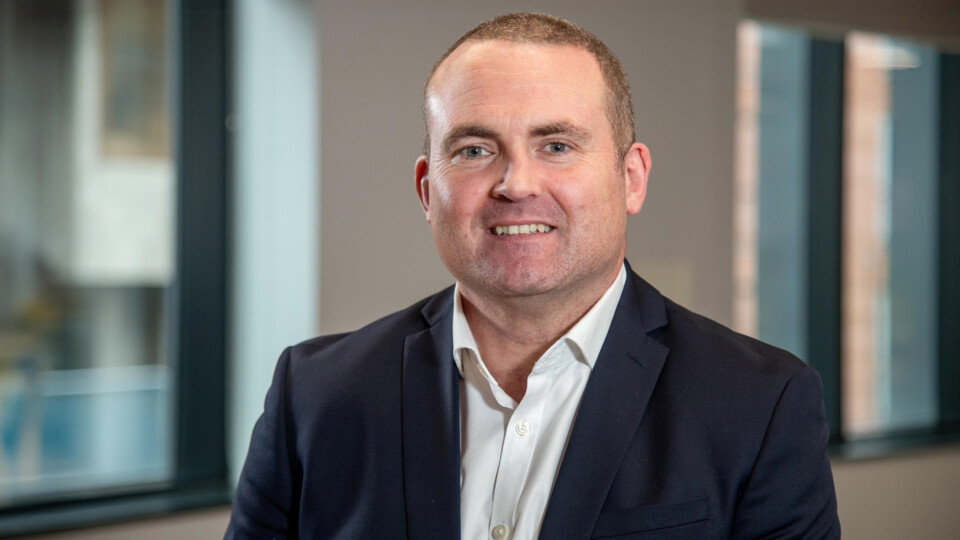
Image Caption (above): Richard Oddy – Azets Partner