
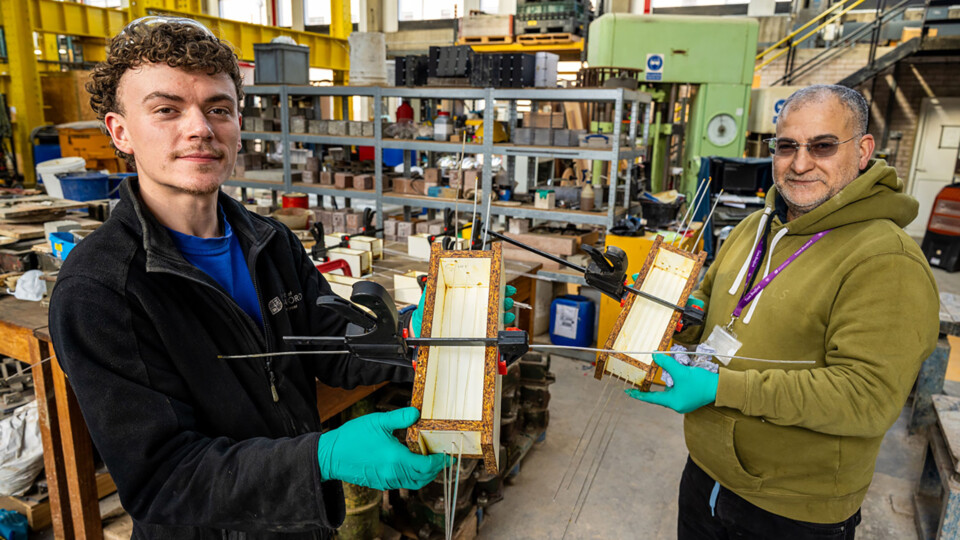
Bradford-led research could cut cement CO2 emissions by 40%
The University of Bradford is set to play a central role in a ground-breaking international research project which could dramatically reduce the carbon footprint of the construction industry.
Working with a Post Doctoral Research Fellow from Tianjin University, China, and the Holcim Innovation Center, France, Bradford researchers will help develop a new concrete technology capable of cutting cement-related CO2 emissions by 10 to 40 per cent.
Concrete accounts for more than seven per cent of global CO2 emissions, largely due to the energy intensive production of cement. With demand continuing to rise worldwide, the sector is under pressure to reduce emissions while maintaining the structural performance society relies on.
The new €260,000 (£226,000) EU funded project aims to meet that challenge, and the University of Bradford will lead the scientific and technical development.
Ashraf Ashour, Professor of Structural Engineering in the School of Computing and Engineering, a globally recognised expert in sustainable construction materials, will supervise the project from the University of Bradford.
He said: “This project has the potential to reshape how the world makes concrete.
“By using the material’s own chemistry to create high performance nanofillers, we can cut emissions, improve durability, and lower costs, all without disrupting existing construction practices. It’s an exciting step toward genuinely net zero concrete.”
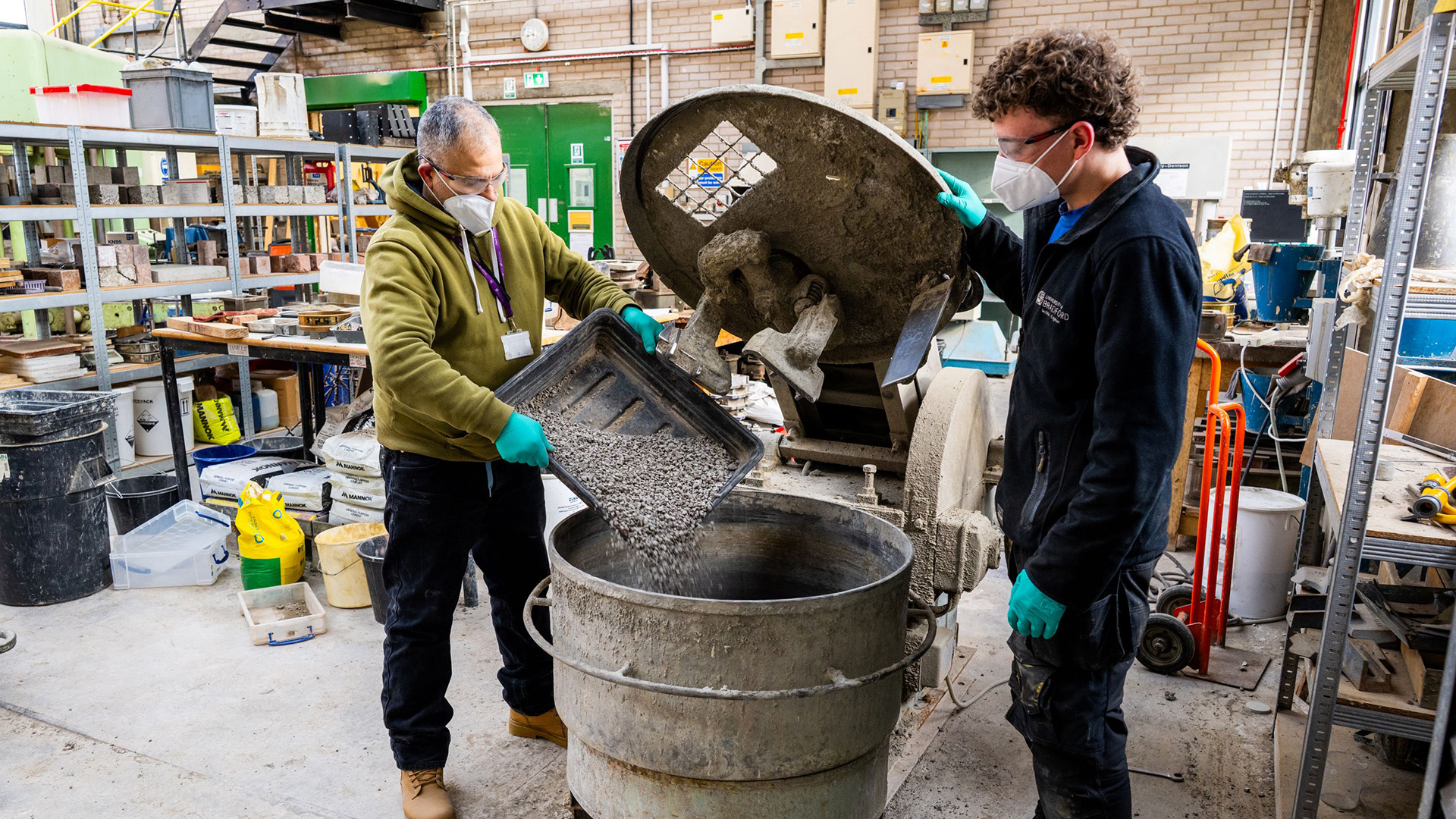
From left, student Abba Akkady and technician Regan Broadbent prepare to make concrete for a slump test. Images credit: Kiran Metha@KM Images Ltd
How it works
Professor Ashour’s team will host the majority of the research over the next two years, using the University’s specialist laboratories, large scale structural testing facilities and its strong track record in low carbon construction innovation.
At the centre of the project is Self Nanocrystallisation of Cement (SNC), an entirely new approach using cement’s own hydration chemistry to create nanomaterials capable of strengthening concrete.
The process transforms naturally formed nanoscale calcium hydroxide into nano calcium carbonate using controlled CO2 bubbling, producing a low cost, energy efficient nanofiller that can be mixed directly into fresh concrete.
Bradford’s researchers will lead the experimental testing of SNC modified concretes, examining improvements in strength, toughness, durability and resistance to cracking and corrosion. These enhancements mean that concrete could achieve one to three higher strength classes without increasing cement content, enabling engineers to use significantly less cement while delivering the same or better performance.
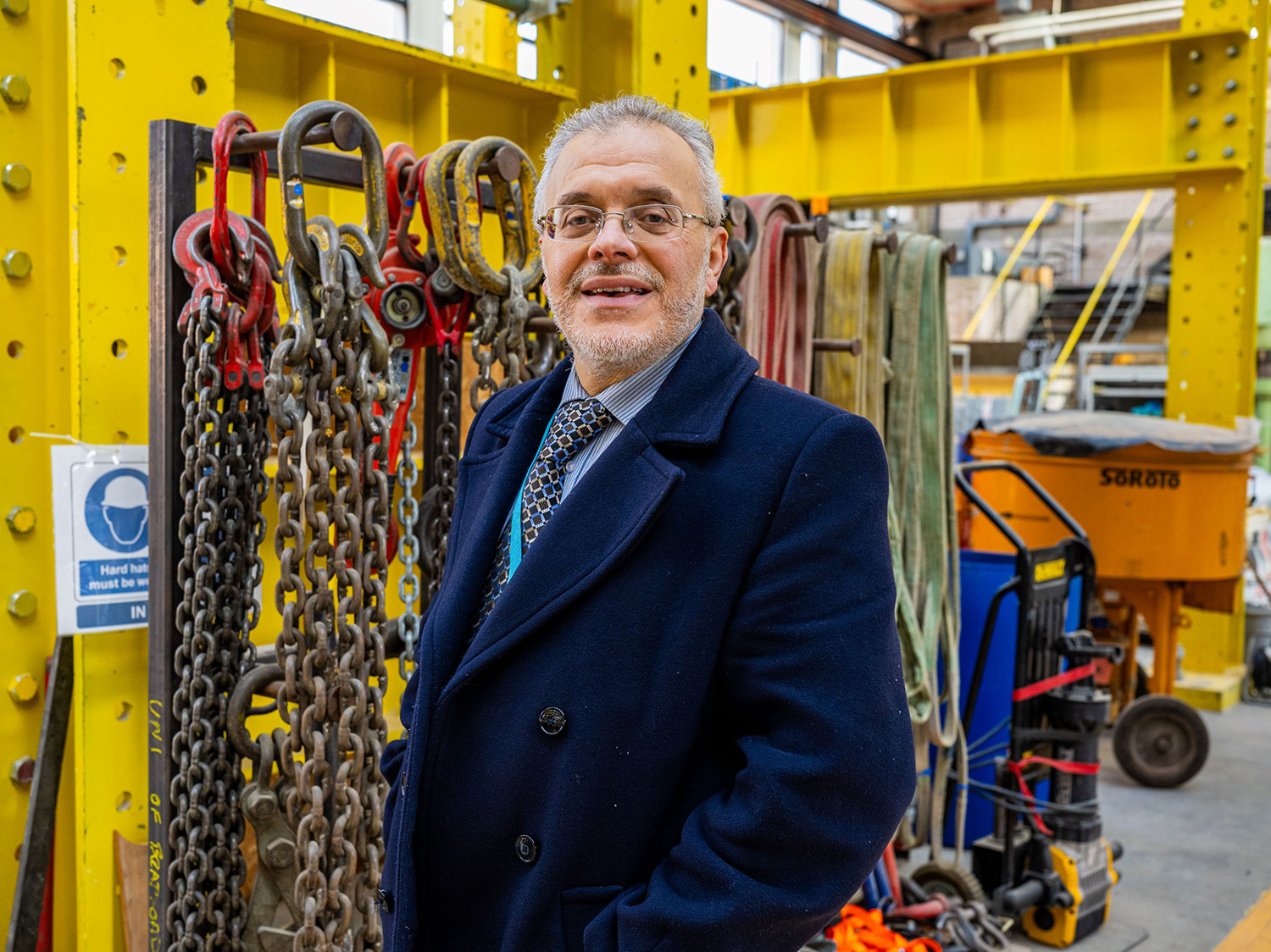
Ashraf Ashour, Professor of Structural Engineering in the School of School of Computing and Engineering at the University of Bradford. Images credit: Kiran Metha@KM Images Ltd
Cutting construction costs
Alongside major emissions reductions, the technique could also cut construction costs by 25 per cent, thanks to lower cement usage and longer-lasting structures.
The project will also see the University of Bradford undertake advanced life cycle assessment, numerical modelling and structural-scale testing to validate the technology. A three-month secondment at Holcim’s global R&D centre will support industrial-scale evaluation.
If successful, the SNC approach could become one of the most practical and scalable tools yet for delivering net zero concrete, supporting global climate targets and strengthening Bradford’s growing reputation as a leader in sustainable engineering.