
AI questions validity of famous Anne Boleyn sketch
This year marks the 490th anniversary of the death of Anne Boleyn, second wife of Henry VIII and one of the most controversial, and celebrated, figures in British history, not least because of her pivotal role as catalyst of the English Reformation.
It was famously Anne Boleyn’s refusal to become Henry VIII’s mistress that prompted him to seek an annulment from his then wife Catherine of Aragon, a request duly refused by the Pope, which led to Henry’s historic break from Rome, the establishment of the Church of England and the Dissolution of the Monasteries.
Anne was also mother of Queen Elizabeth I and remains a symbolic figure, so it is poignant that, as we approach the anniversary of her death, May 19, a new study using facial recognition algorithms developed at the University of Bradford has cast doubt on whether a famous sketch traditionally identified as Anne Boleyn and held in the Royal Collection is the Tudor queen at all.
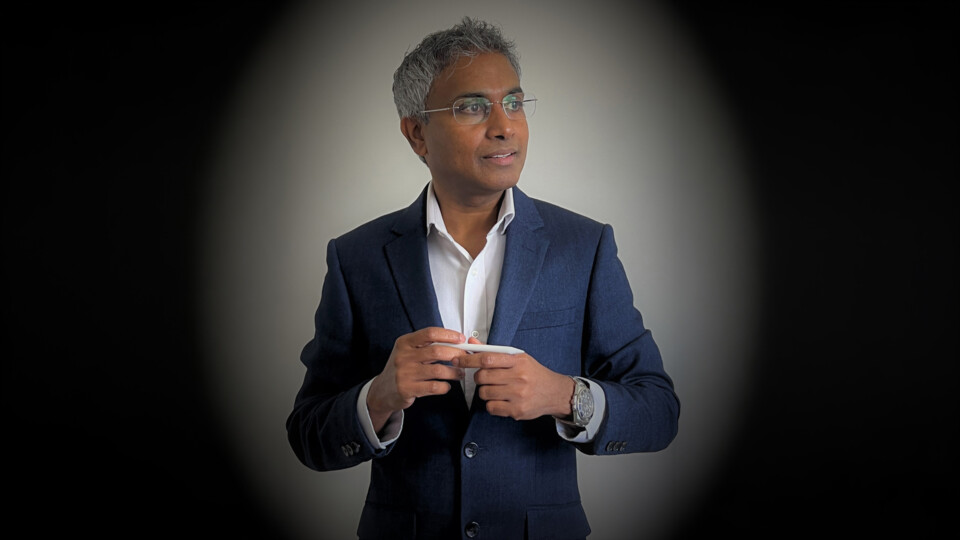
“We’re not replacing scholarly judgement,” says Professor Hassan Ugail, Director of the Centre for Visual Computing at the University of Bradford, who uses pioneering AI-driven facial recognition software to analyse historical images. “What we’ve built is a quantitative test that can support or challenge attribution hypotheses when traditional evidence is fragmentary.”
New conversation
Independent historian and lead author of the study Karen L Davies concurs. She argues this is more about a re-evaluation of the entirety of historical and modern data.
“This study asks whether a reassessment of the current attribution is justified,” she says. “We believe it is, and that question feels central to the purpose of the work. If that conversation begins to happen more widely, particularly at the level of collections, it would be a meaningful outcome and would also reflect the strength of both the facial recognition analysis and the historical research together.”
Karen, who is also the author of historical fiction novel A Heretic’s Gift, added: “It was the convergence of contradictions that made us ask the question. This is about asking better questions of the evidence we already have. AI doesn’t replace judgement, it provides an additional layer of quantifiable evidence that allows us to test long-accepted assumptions.
“We did not start with a face and force the history to fit. We started with the history and tested the face. Facial recognition did not make the argument, it exposed the pattern.
“I’ve spent many years researching Anne Boleyn, and what ultimately drove me to this project was a growing dissatisfaction with the long-accepted Windsor identification. There were simply too many contradictions. The drawing didn’t align with the primary sources, and each proposed explanation seemed only to generate further inconsistencies rather than resolve them.”

Historian and author Karen L Davies. Picture credits: University of Bradford.
AI vs history
For more than two centuries, a sketch by Holbein, catalogued as RCIN 912189 and part of the Royal Collection, has been widely accepted as Anne Boleyn – although the identity of the sitter has long been acknowledged by Royal Collection Trust as the subject of ongoing debate. The attribution rests on an 18th century inscription claiming to copy a mid-16th century original, a source that has never been verified. New research suggests that confidence may have been misplaced.
The drawings do not have a verifiable chain of attribution. Having passed through multiple hands, been labelled later, and showing unstable identifications across the corpus, the authors argue the transmission itself cannot be considered reliable. They say that selectively accepting some inscriptional errors while treating others as authoritative risks distorting the evidential picture.
Using facial recognition, contemporary documentary evidence, and a newly proposed AI-driven Working Likeness Methodology, the research team argues that a second Holbein drawing, RCIN 912190, currently labelled “An Unidentified Woman”, aligns far more closely with eyewitness descriptions, family resemblance networks, and computational analysis.
Their conclusion: the wrong sketch may have been identified as Anne Boleyn for more than 200 years.
To avoid stylistic interference from later painted portraits, the team restricted their biometric analysis to Holbein’s working drawings, the sketches Holbein produced from life, often using pin-pricking, stylus-tracing and fold-lines to transfer proportions accurately to finished panels.
“The Holbein drawings functioned as working likenesses, technical blueprints for painted portraits,” explained Professor David Stork from Stanford University, California, who also contributed to the paper. “That makes them uniquely suited to biometric analysis, which measures bone structure and proportion rather than hairstyle or costume.
Picture puzzle
The researchers examined 81 surviving Holbein preparatory sketches, the life drawn chalk portraits Holbein used to create finished works. Only 14.8% of these drawings have secure contemporary identifications. Most rely on much later inscriptions, some demonstrably erroneous, including mislabelled nobles and family members.
Anne Boleyn’s case is especially complicated. Contemporary accounts describe her as dark haired, slender, and possessing a distinctive “little neck”, a feature she reportedly referenced before her execution.
While the overall image does not align with primary descriptions of Anne, the long oval face creates a puzzle. It both supports and tests the traditional identification.
By contrast, the traditionally attributed sketch (912189) shows a sitter with blonde hair, a substantial build, and a pronounced double chin, features that seem to contradict eyewitness descriptions.
Meanwhile, the second portrait (912190), long considered unidentified and held in the Royal Collection Trust at Windsor Castle, shows a dark haired, slender woman whose proportions match the documentary record precisely.
Karen added: “If the Windsor sketch were a true likeness of Anne Boleyn, why was it set aside? Why did Elizabethan artists, and later generations, reconstruct her face instead? What artist sets aside a face in favour of reconstructing it from relatives, as has been claimed?”
Why facial recognition?
In recent years, advances in machine learning have enabled algorithms to detect biologically meaningful facial structures such as bone geometry, proportional relationships, and inherited features that remain consistent even across artistic styles.
The team used a high performance ‘AdaFace’ model (a deep face recognition model designed to perform better when face images vary widely in quality) combined with the Sample and Computation Redistributed Face Detector detection framework, extracting 512 dimensional facial embeddings from each Holbein sketch. These were compared against a validated dataset of known Tudor family members, including the Howard siblings and a verified portrait of Elizabeth I at 13, painted by William Scrots.
The question was simple: If 912190 really does represent Anne Boleyn, would it show a plausible mother daughter resemblance to Elizabeth I?
The answer was yes.
The drawing produced a similarity score of 76.9% relative to Elizabeth, comfortably within the range detected among known Tudor relatives in the validation set.
A Working Likeness Methodology
To keep the analysis historically grounded, the team developed what they call the Working Likeness Methodology, a framework that combines:
- contemporary documentary descriptions
- validated genealogical networks
- conservation and provenance history
- statistical clustering across Holbein’s corpus
- facial recognition as a final evidential layer
An evaluation of ‘An Unidentified Woman’ sketch revealed it:
- matches Anne’s documented hair colour, build and “little neck”
- shows strong kinship level similarity with Elizabeth I
- clusters with identified Howard family members
- aligns with early preservation and provenance patterns
The findings also raise the possibility of a further Boleyn family identification, potentially including Mary Boleyn.
Meanwhile, 912189, the traditional identification, clusters more closely with Elizabeth Howard, Anne’s mother, whose likeness may have been confused in later copying and inscription traditions.
Why the misidentification lingered
The researchers suggest several reasons for the centuries long confusion:
- Holbein’s drawings were heavily re mounted, re labelled and recopied in the 1700s
- 18th century inscriptions often contained transcription errors
- Anne’s image became politically and culturally contested after her death
- Artists and engravers, such as Hollar in 1649, popularised other portrait types entirely unrelated to 912189
- Early collectors sometimes confused Anne with her sister Mary Boleyn or her mother
A queen rediscovered?
The study stops short of declaring 912190 as definitively Anne Boleyn but instead offers an alternative based on new evidence linked to proven facial recognition techniques.
As Davies put it: “This isn’t about rewriting history with machines. It’s about letting technology help us test the stories we inherited. This was never about replacing historians, it was about giving history another tool.”
Reassessing Anne Boleyn and other Boleyn women in Holbein drawings using facial recognition is published in Nature Heritage Science.
Picture credits (top of page): University of Bradford ~Professor Hassan Ugail from the University of Bradford.