
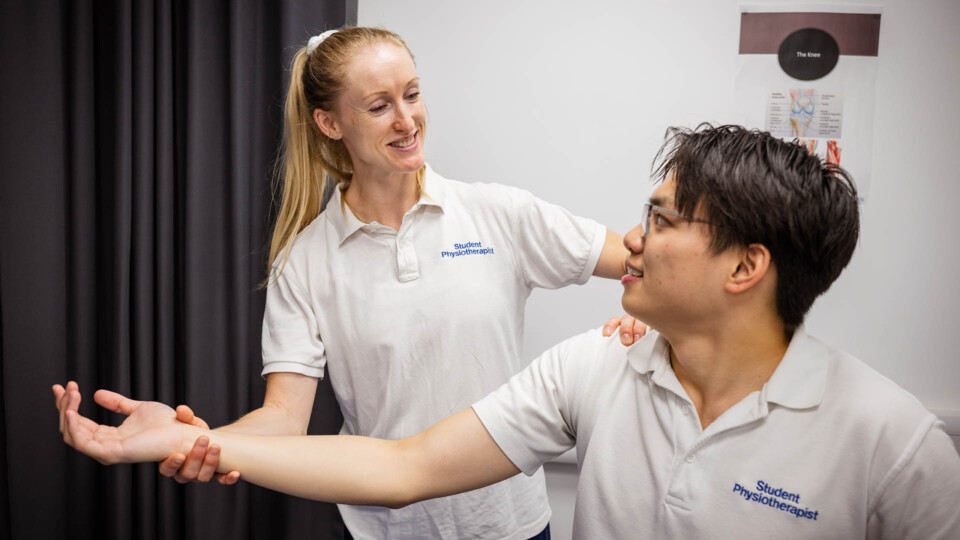
For Steph Ifould, returning to education was about proving it was possible
For Steph Ifould, returning to education in her 30s was about proving something to herself.
The 37-year-old graduated this week from the University of Bradford with an integrated master’s degree in Physiotherapy in Sport and Exercise Medicine, a moment that marks not just academic success, but years of persistence through personal and professional challenges.
“I’d sort of written myself off a little bit,” she says. “I thought, I’ve chosen my path now, I can’t change it. But actually, it’s never too late.”
Steph’s journey to physiotherapy has been far from straightforward. After leaving college, she moved to London to pursue a career in dance, performing in contemporary productions. But injuries and health challenges forced her to step away, setting her on a different path.
“I always wanted to do physiotherapy after that, but I didn’t have the right A-levels,” she explains. “It just didn’t feel like the right time to go back and start again.”
Instead, she built a career in education, completing a degree in primary education and later a master’s, and spending several years teaching. But during the COVID-19 pandemic, she began to question whether it was the right fit.
The turning point came from an unexpected source, a friend who returned to university in her 50s.
“That was the moment I thought, well, if she can do it, I can do it in my 30s.”
Steph enrolled at Bradford in 2022, choosing the four-year integrated master’s route. Alongside her studies, she continued working as a personal trainer and fitness instructor, something she says helped her reconnect with physiotherapy.
“Prior to my degree, a lot of personal training clients would come to me with injuries and ask for advice, and I’d think, you should really see a physio,” she says. “That brought me back to it.”
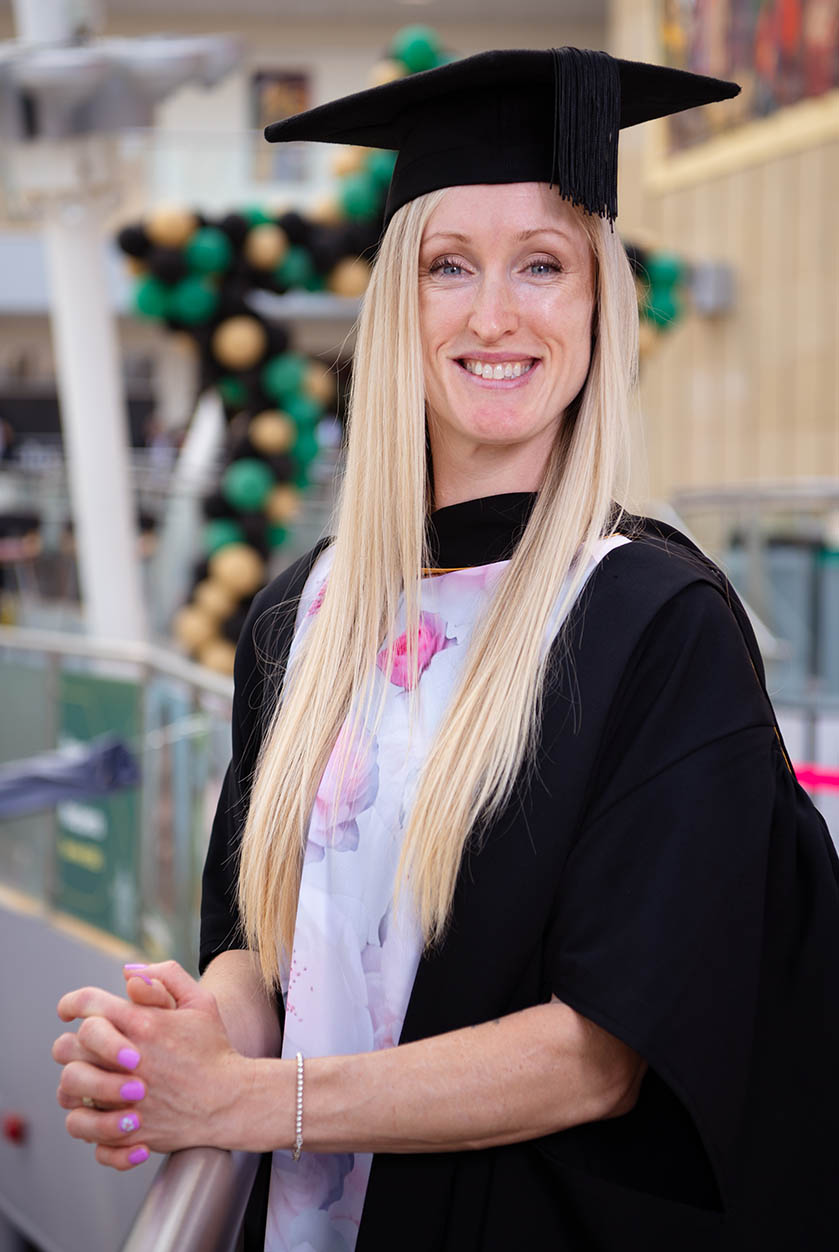
Steph Ifould, who returned to education in her 30s and has graduated with one of the highest marks in her career. Picture credit: KM Images/University of Bradford.
1,000 hours of placements
Her course has included more than 1,000 hours of clinical placement, spanning NHS settings, private hospitals and elite sport. From helping patients recover after surgery to working with Bradford Bulls rugby players, she describes the experience as both varied and rewarding.
“You get such a range, from helping people breathe properly in hospital to being pitch-side with sports injuries,” she says. “It’s a lot of problem-solving, trying to work out what’s really going on in the body.”
Throughout her studies, Steph has excelled academically, maintaining an average above 85 per cent and on is track to graduate with one of the highest marks in her cohort. She has also served as a year representative, supporting fellow students.
Her tutor, Assistant Professor David Rees, says: “Steph has demonstrated exceptional tenacity and resilience throughout her studies, consistently achieving an outstanding academic standard. She is kind, generous and supportive of others, and always eager to learn. She is a credit to herself and to the University, and will undoubtedly become an excellent physiotherapist.”
Personal challenges
Behind the academic success, however, has been a particularly challenging few years.
During her degree, Steph balanced her studies with planning her wedding, coping with a serious injury, and dealing with the loss of three close family members.
“I was offered the option of taking time out,” she says. “But I felt like my studies gave me a purpose, so I didn’t want to stop.”
Around 18 months ago, she also experienced a prolapsed disc which left her unable to sit for months.
“It was a really difficult time,” she says. “But the support from the course team made a huge difference.”
That support included practical adjustments, such as providing a standing desk for exams during her recovery, as well as flexibility during bereavements.
“It felt like they genuinely cared,” she adds. “They made sure I could keep going.”
Now, as graduation approaches, Steph is already preparing for the next step. She has secured a role at a private sports therapy clinic, combining physiotherapy with personal training, and is looking forward to building her experience in clinical practice.
For her, the journey is proof that changing direction is not only possible, but worthwhile.
“There are so many opportunities,” she says. “Sometimes you just need that moment, or that person, to make you realise you can do it.”
Her message to others considering a return to education is simple: “It’s never too late. If you want to do it, there are ways to make it work so talk to the people around you and find a solution rather than worry too much about the barriers you perceive at this moment in time.”