
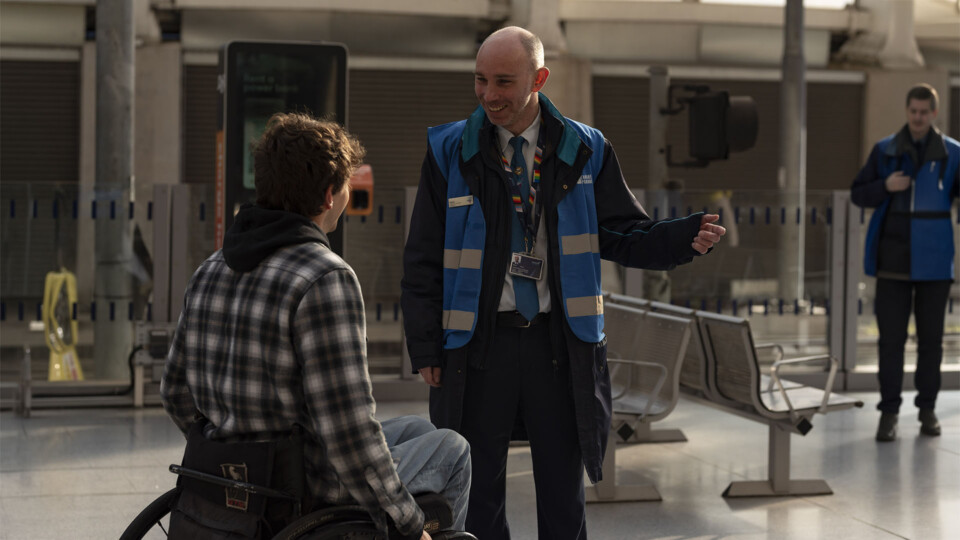
TRU launches communication cards as part of its commitment to delivering a more accessible railway
The Transpennine Route Upgrade (TRU) has placed accessibility at the heart of its transformation of the railway across the North since its inception. The latest example of this commitment is the introduction of new Customer Communication Cards, designed to help break down communication barriers between customers and railway staff.
The cards include simple prompts and conversation starters to help customers explain what support they need by showing them to any member of staff, and are available at key stations along the TRU route or as downloadable PDFs from www.thetrupgrade.co.uk/accessibility.
Carl Harland, TRU Accessibility Lead, said:
“For many of our disabled customers, asking for help can be one of the biggest barriers to travel. These cards help start that conversation, giving customers an easy way to communicate their needs and enabling staff to provide support needed for a smooth end-to-end journey.
“For those that need them, the cards are a very positive initiative, with the designs clear and easily readable.”
TRU will deliver a railway that is easier to use, more inclusive, and designed so every customer can travel with confidence. The programme is investing in modernised stations along the route that will include:
- Step-free access, making it easier for customers with additional access needs, pushchairs or luggage to move around
- Improved facilities such as accessible waiting shelters, seating and upgraded blue badge parking
- Upgraded signage and wayfinding designed to support customers with visual, cognitive or mobility impairments
- Clearer audio and visual announcements and upgraded Customer Information Screens (CIS)
- Hearing loops installed or improved at key locations to support customers who use hearing aids
To further support customers during improvement works, TRU has introduced other additional tools and processes to make journeys easier, such as Passenger Assist. Passenger Assist allows customers to request help with boarding, alighting, connections and navigating stations, with train operators able to arrange alternative accessible transport if required.
Accessibility remains a priority when rail replacement buses are in operation. All services provide space for one wheelchair user, with an accessible alternative arranged if a vehicle cannot accommodate this. As of 1 August, larger vehicles making shorter journeys between stops will now also provide audible and visual onboard information, supporting customers with visual or hearing impairments.
Dedicated colleagues are deployed at major rail-to-road interchanges to help customers board the correct service and access any assistance they need, while train operator contact centres are on hand to help plan accessible journeys and pre-arrange Passenger Assist.