
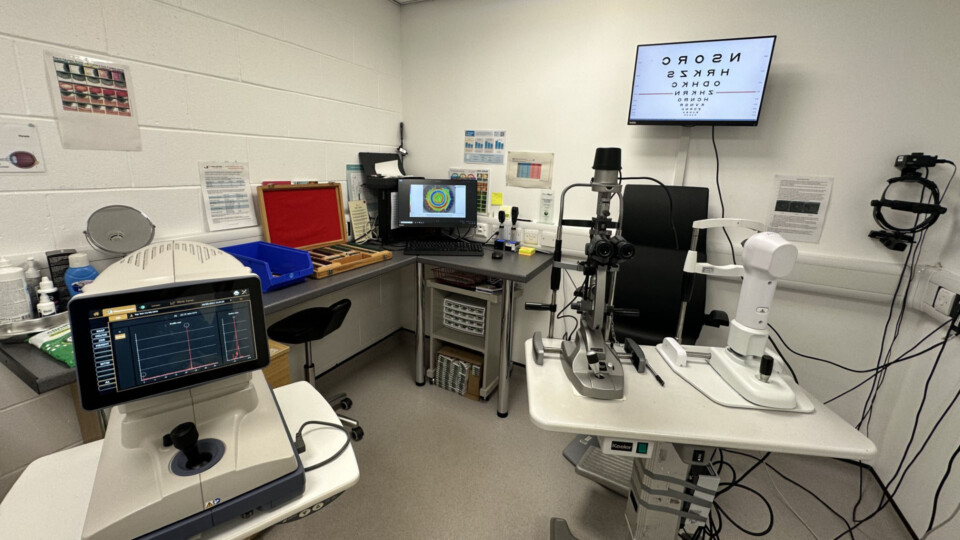
Bradford myopia praised as it marks 10 years of helping protect children’s sight
One of the UK’s pioneering myopia management clinics is celebrating its 10th anniversary after a decade spent helping children and young people manage one of the world’s fastest-growing eye health challenges.
The University of Bradford’s Myopia Management Clinic was established in 2016 and was among the first dedicated specialist clinics of its kind in the UK. Since then, it has helped families access increasingly sophisticated techniques designed to slow the progression of myopia, more commonly known as short-sightedness.
Today, the clinic has over 100 patients aged from four to their mid-twenties, offering a range of evidence-based treatment options, including specialist contact lenses, spectacle lenses and low-dose atropine eye drops, a treatment recently licensed in the UK that has already transformed myopia management in countries such as Australia and China.
Reducing risk
Myopia is becoming increasingly common worldwide. While many people associate short-sightedness with needing glasses or contact lenses, higher levels of myopia are linked to an increased risk of serious eye conditions later in life, including glaucoma, retinal detachment and myopic maculopathy.
The clinic forms part of the University’s School of Optometry and Vision Science, which next year will celebrate its centenary after helping shape the development of optometry education and practice in the UK.
Kathryn Webber, Clinical Teaching Fellow and Myopia Management Clinic Lead, said: “When we established the clinic ten years ago, myopia management was still a relatively new area of clinical practice in the UK. We were among the early adopters, helping to build awareness of approaches that could slow the progression of myopia in children and young people.
“What has been remarkable is the pace of change. Ten years ago there were relatively few treatment options available. Today we have a range of evidence-based interventions, including specialist spectacle lenses, contact lenses and, most recently, low-dose atropine eye drops that have recently become available in the UK.
“The aim is not simply to correct a child’s vision today, but to help protect their eye health for decades to come. That’s why early intervention is so important.”
The clinic was founded by Kathryn, whose interest in myopia management began after a conversation with the parent of a young patient early in her career.
She said: “What started as curiosity about some emerging research became a passion that has shaped my clinical and research career. That first patient became the beginning of a journey that eventually led to the creation of the clinic and many years of supporting children and their families.”
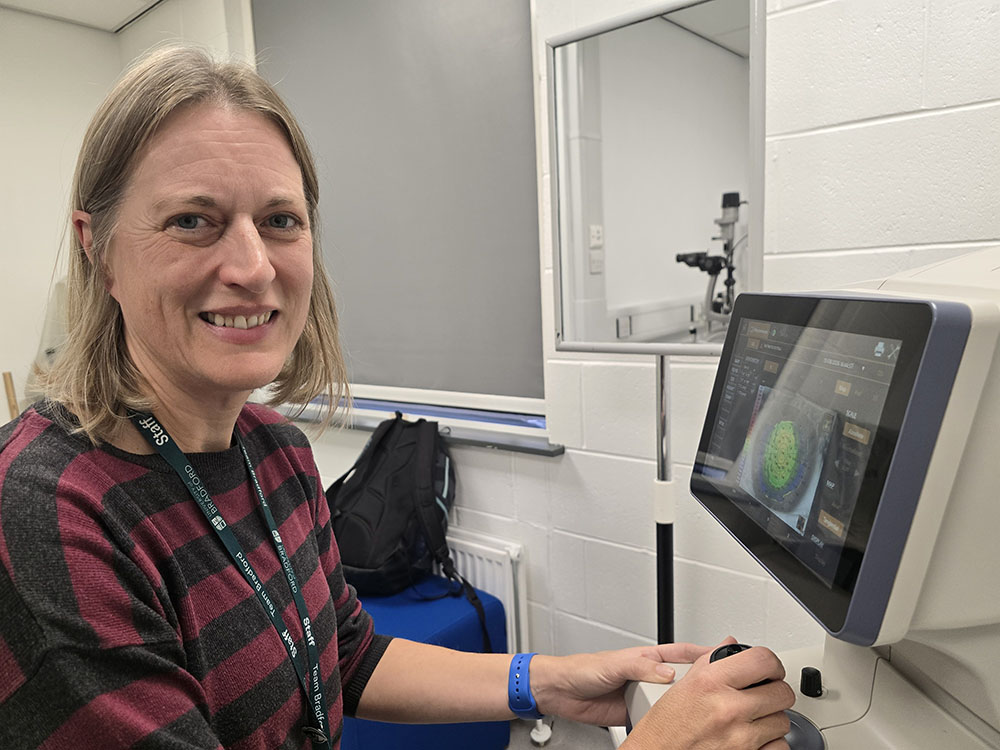
Kathryn Webber, Clinical Teaching Fellow and Myopia Management Clinic Lead. All credits: University of Bradford
Parent praises clinic
Parent Stephanie Whaling, whose daughter Elsie was diagnosed with myopia at a young age, has been attending the clinic fora number of years.
She said: “When Elsie was diagnosed with myopia, I was worried about what it could mean for her eyesight as she got older. Finding the Myopia Clinic at Bradford University gave me knowledge, reassurance and most importantly the feeling that there was something proactive we could do to help.
“Elsie was very young when we first approached them and other providers were reluctant to offer her myopia management contact lenses because of her age. Elsie was adamant she wanted them, and Bradford took the time to get to know her and recognise just how capable and determined she was. More than three years later, she manages her lenses brilliantly.
“More recently they recognised Elsie as a good candidate for a new trial, an opportunity I would never have known about otherwise. We’re still partway through it, but her last two appointments have been positive and her prescription stable.
“What really makes the clinic special is the relationship they’ve built with Elsie. They listen to her, involve her in her own care and take the time to feed her curiosity by explaining the equipment and showing her how things work. She trusts them completely, and so do I.
“We travel quite a distance for her appointments, but I wouldn’t take her anywhere else. As well as being incredibly knowledgeable and professional they’re also warm, friendly and genuinely caring. We feel very lucky to have found them.”
Alongside patient care, the clinic plays an important role in teaching the next generation of optometrists and advancing research in a rapidly evolving field.
Myopia management
Kathryn added: “The clinic sits at the intersection of patient care, teaching and research. Our students gain experience in an area of practice that is expanding rapidly, while patients benefit from some of the latest evidence-based approaches to myopia management.
“Ten years ago, we were only beginning to understand how we might slow myopia progression. Today we have multiple effective treatment options and an exciting research pipeline. It’s been incredibly rewarding to see the difference this can make to young people’s lives and I’m excited to see what the next decade brings.”
The milestone comes ahead of a landmark year for the University’s School of Optometry and Vision Science, which will celebrate 100 years of optometry education in Bradford in 2027.