

Are locally led initiatives more effective than top-down Government schemes?
A new national compendium published by the Key Cities Innovation Network (KCIN) highlights how cities and universities across the UK are rethinking innovation ecosystems to support more inclusive and sustainable regional growth.
The University of Bradford is among ten contributors to Innovation Ecosystems, the first i‑PLACE Compendium, which brings together peer‑reviewed research and real‑world case studies exploring how approaches can better connect innovation, enterprise and economic development if they are local solutions that are deliberately shaped by the specific place they’re happening in (known as ‘place-based’).
Example of success
The Bradford contribution, Innovator‑driven enterprise: an approach to regional ecosystems, focuses on the importance of supporting individuals and organisations already embedded within local economies. Rather than treating innovation as something imported from outside, the paper argues for building on existing strengths by improving access to skills, networks, finance and long‑term partnership support.
A key Bradford example referenced in the context of this approach is the Bradford‑Renduchintala Enterprise Ecosystem (BREE), which brings together students, researchers and members of the local community to develop business ideas rooted in local need. BREE reflects the KCIN emphasis on inclusive, place‑based innovation, where universities act as civic anchors connecting research, enterprise and communities.
Professor Sherif El‑Khamisy, Pro‑Vice‑Chancellor for Research and Innovation at the University of Bradford, said: “Universities are anchor institutions, playing a crucial role in local, regional and national economies. At the University of Bradford, we see this symbiotic relationship delivering tangible impact for communities, students, businesses and public services.
“We work closely with employers, companies, councils and agencies, alongside partners such as the NHS and regional authorities, to ensure innovation is rooted in local need and opportunity. This KCIN report reinforces the importance of place‑based innovation and the role of universities in nurturing talent, creativity and entrepreneurial energy within their cities.”
BREE
The Bradford‑Renduchintala Enterprise Ecosystem (BREE) is the University of Bradford’s place‑based enterprise programme, designed to help turn ideas into viable businesses. Open to students, staff and the wider local community, BREE provides mentoring, funding and access to expertise, supporting innovation that is rooted in Bradford’s people, strengths and economic needs. By connecting research, entrepreneurship and local partners, BREE demonstrates how universities can act as civic anchors to drive inclusive growth and long‑term economic impact.
Professor El‑Khamisy added: “Nowhere is this more evident than in the Bradford‑Renduchintala Enterprise Ecosystem (BREE). At Bradford, we see innovation as part of a wider ecosystem that connects research, enterprise and communities. Initiatives like BREE demonstrate what’s possible when universities act as civic partners—helping ideas grow locally while contributing to long‑term economic value nationally.”
Local innovation
The KCIN report highlights deep and persistent regional inequalities across the UK and makes the case for place‑based innovation as a way to deliver greater impact for local areas than more centralised approaches.
Bradford is highlighted as an active contributor to the KCIN, drawing on strengths in health, life sciences and engineering alongside a young and diverse population that supports creativity and resilience.
Councillor John Merry CBE, Chair of Key Cities and Deputy City Mayor of Salford, said: “The ideas presented in this compendium are both important and exciting. They show how our cities, working with their universities and partners, can develop innovative approaches that are rooted in local experience but have national relevance.”
Professor Nic Beech, Vice-Chancellor of the University of Salford and co-editor of the Compendium, added: “What distinguishes these contributions is their grounding in place. Each reflects real partnerships, real challenges and real opportunities, demonstrating how innovation ecosystems can be developed in ways that are both locally meaningful and scalable across the UK.”
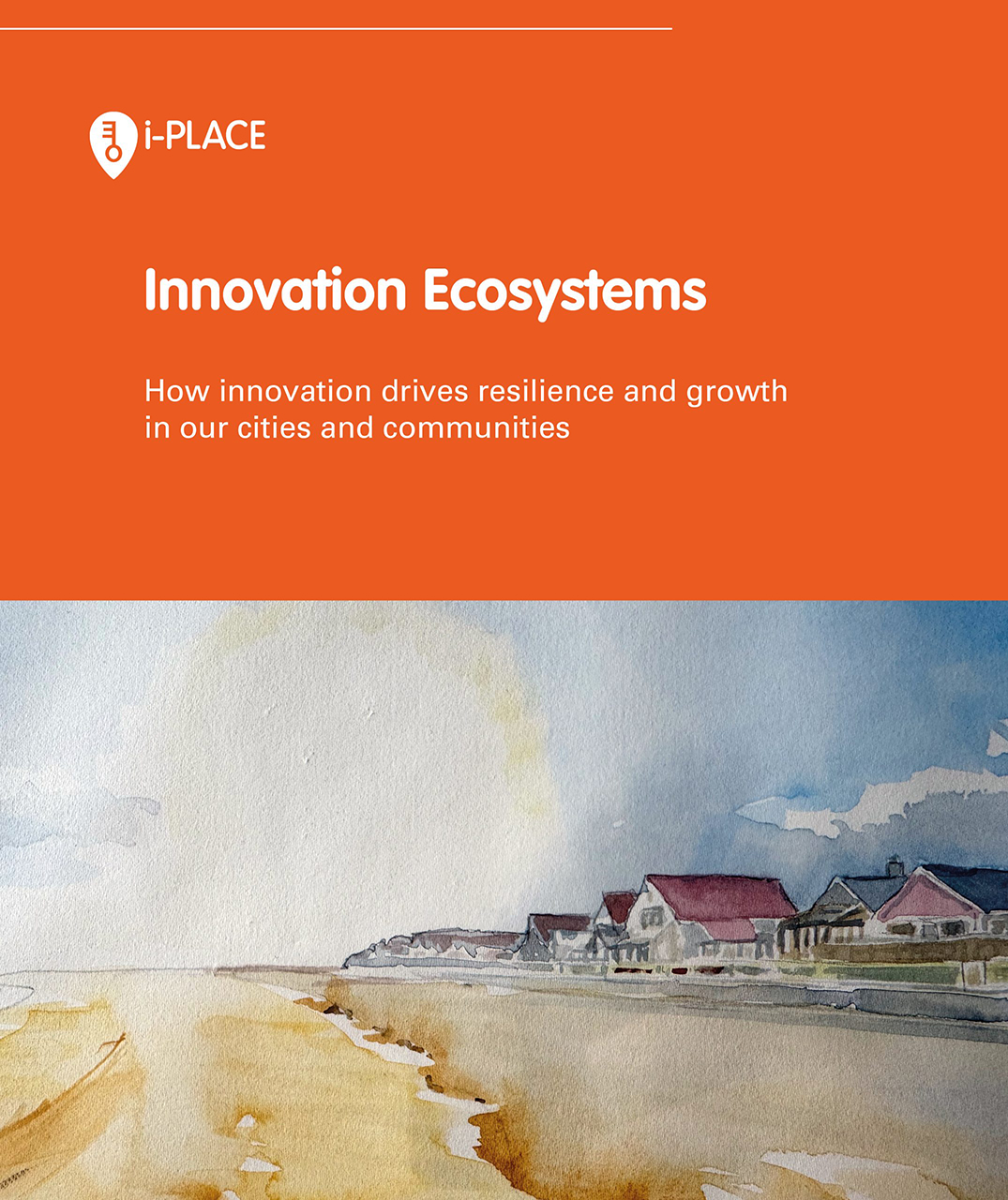
KCIN compendium cover. Credit: KCIN.
KCIN at Bradford
KCIN partners visited Bradford in January 2025, when the University hosted the Network’s third annual conference focused on urban renewal and place‑based innovation.
The Innovation Ecosystems compendium is being launched on Wednesday April 29 and is expected to inform ongoing national debate about the role of cities, universities and partnerships in shaping the UK’s future economic development.
Image caption (top of page): Professor Sherif El-Khamisy, Pro-Vice-Chancellor for Research & Innovation at the University of Bradford. Credit: University of Bradford.