
Bradford research praised as teenage pregnancy rise prompts warning
A national expert has warned of complacency over teenage pregnancy after rates increased for the first time in 14 years, adding the University of Bradford is playing a crucial role in understanding and tackling the issue.
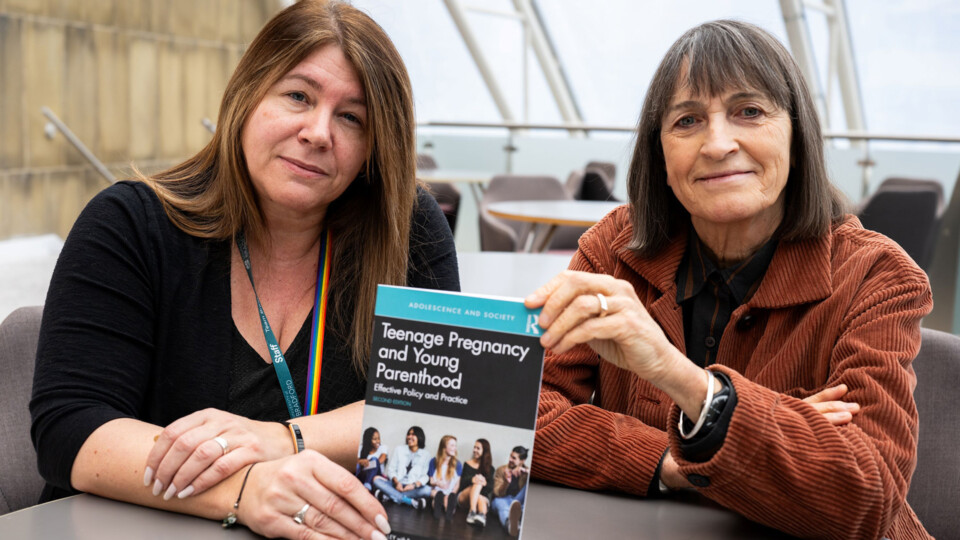
Alison Hadley OBE, Director of the Teenage Pregnancy Knowledge Exchange and a leading figure in shaping national policy for more than 20 years, issued the warning during a visit to the University, where she met academics researching youth reproductive health.
The Teenage Pregnancy Knowledge Exchange provides consultancy in the UK and internationally, supporting countries aiming to reduce adolescent pregnancy through evidence-based approaches.
Office for National Statistics figures, released last year, showed the under 18 conception rate in England increased to 13.9 per 1,000 girls aged 15 to 17 in 2022, the first rise in 14 years.
Alison, an Honorary Professor in the University’s Faculty of Health and Social Care, said: “We need to keep the focus on both helping young people prevent early pregnancy and supporting those who choose to become young parents.If we don’t, we will have increasing inequalities with young parent families facing huge disadvantages.
“There is a sense of complacency from some that because the rates are down, the job is done. But we need to keep applying the lessons to every new generation of young people.”

From left, Dr William Martin, Executive Dean, Faculty of Health and Social Care, Dr Joanna Nichols, Head of Department, Healthcare Leadership and Management at the University of Bradford, Dr Elizabeth Cooper, Head of School: Nursing, Public Health and Healthcare leadership, University of Bradford and Alison Hadley OBE, Director of the Teenage Pregnancy Knowledge Exchange. Images credit: Kiran Metha@KM Images Ltd
Targeted support
She said targeted support was needed for young people at heightened risk, warning increased school absence since Covid had left some without access to relationships and sex education, increasing their vulnerability to early pregnancy.
Alison co-authored the second edition of Teenage Pregnancy and Young Parenthood: Effective Policy and Practice, with experts including Dr Joanna Nichols, Head of Department, Healthcare Leadership and Management at the University of Bradford.
The book examines what has happened since England’s Teenage Pregnancy Strategy, led by Alison during the last Labour Government, which achieved a 70 per cent reduction in under 18 conception rates. It explores new research, international case studies, changes to sexual health services, the impact of austerity, and how the Covid pandemic reshaped access to care.
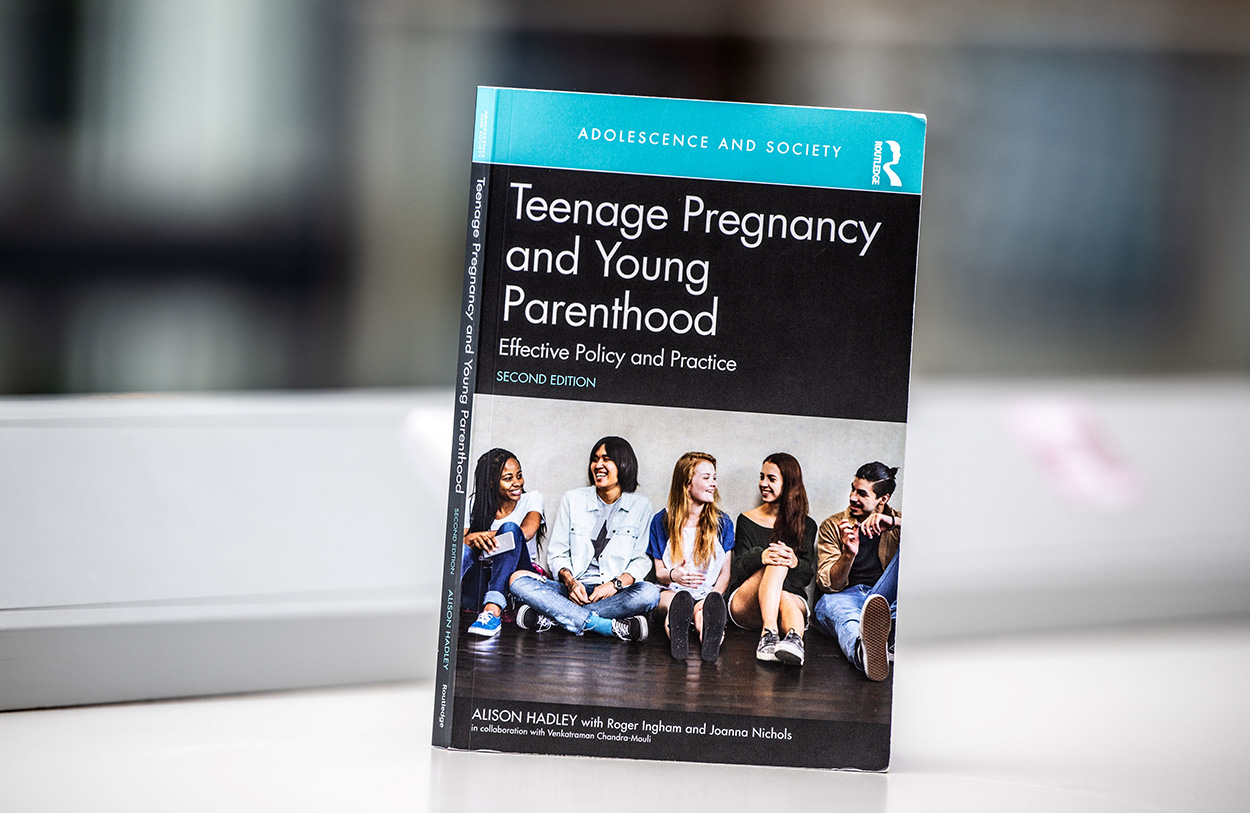
The second edition of Teenage Pregnancy and Young Parenthood: Effective Policy and Practice, by Alison Hadley OBE with experts including Dr Joanna Nichols. Images credit: Kiran Metha@KM Images Ltd
Threat of lost generation
Dr Nichols’ contributions draw on her PhD research, which highlighted how the move to online services during the pandemic increased access for some young people but excluded others.
Her work charted the consequences of austerity and the loss of national infrastructure following the closure of the National Teenage Pregnancy Unit in 2010.
She said: “The young people who are becoming pregnant now are more disadvantaged and more vulnerable than ever before. Partly due to austerity. Life and risk factors are worse. Young people can fall between the cracks.
“Bradford is an area of inequality, and we need to be supporting young people. If we don’t get things right, we will have an entire lost generation.”
Alison praised Dr Nichols’ passion and leadership in the field, saying her expertise would help inspire the next generation of practitioners.