
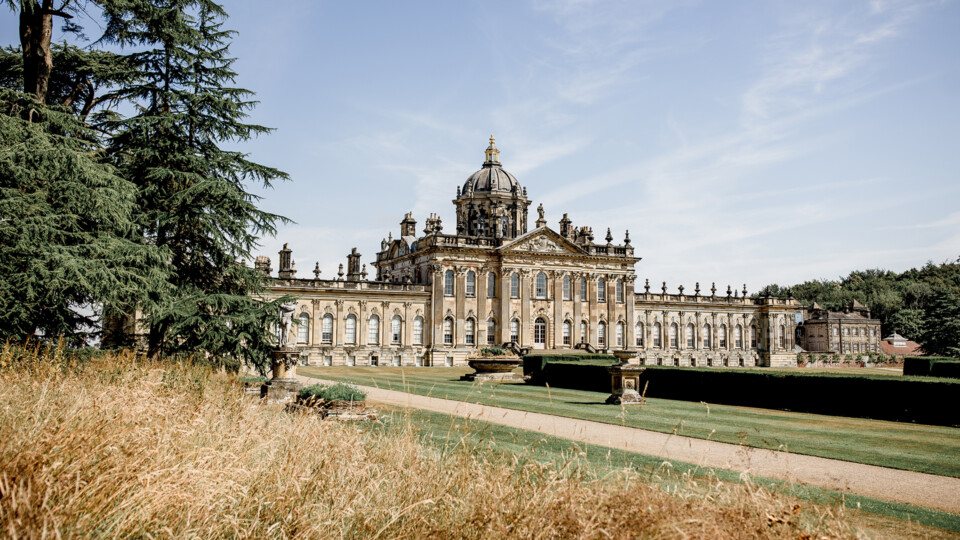
Castle Howard introduces rare ancient breed cattle to major nature restoration project
Castle Howard has reached a major milestone in their 30-year Bog Hall Habitat Bank nature restoration project, by introducing a herd of rare White Park Cattle to the newly sown meadows areas.
The Bog Hall Habitat Bank project is a large-scale 30-year restoration and rewilding project on the Castle Howard Estate, designed and delivered in collaboration with Environment Bank. The project is transforming 440 acres of low-yielding agricultural land into a thriving space for nature. The site, along with Castle Howard, sits within the Howardian Hills National Landscape, and includes a small area designated as a Site of Importance for Nature Conservation. The site has been carefully selected for its immense potential to enhance biodiversity due to its boggy terrain.
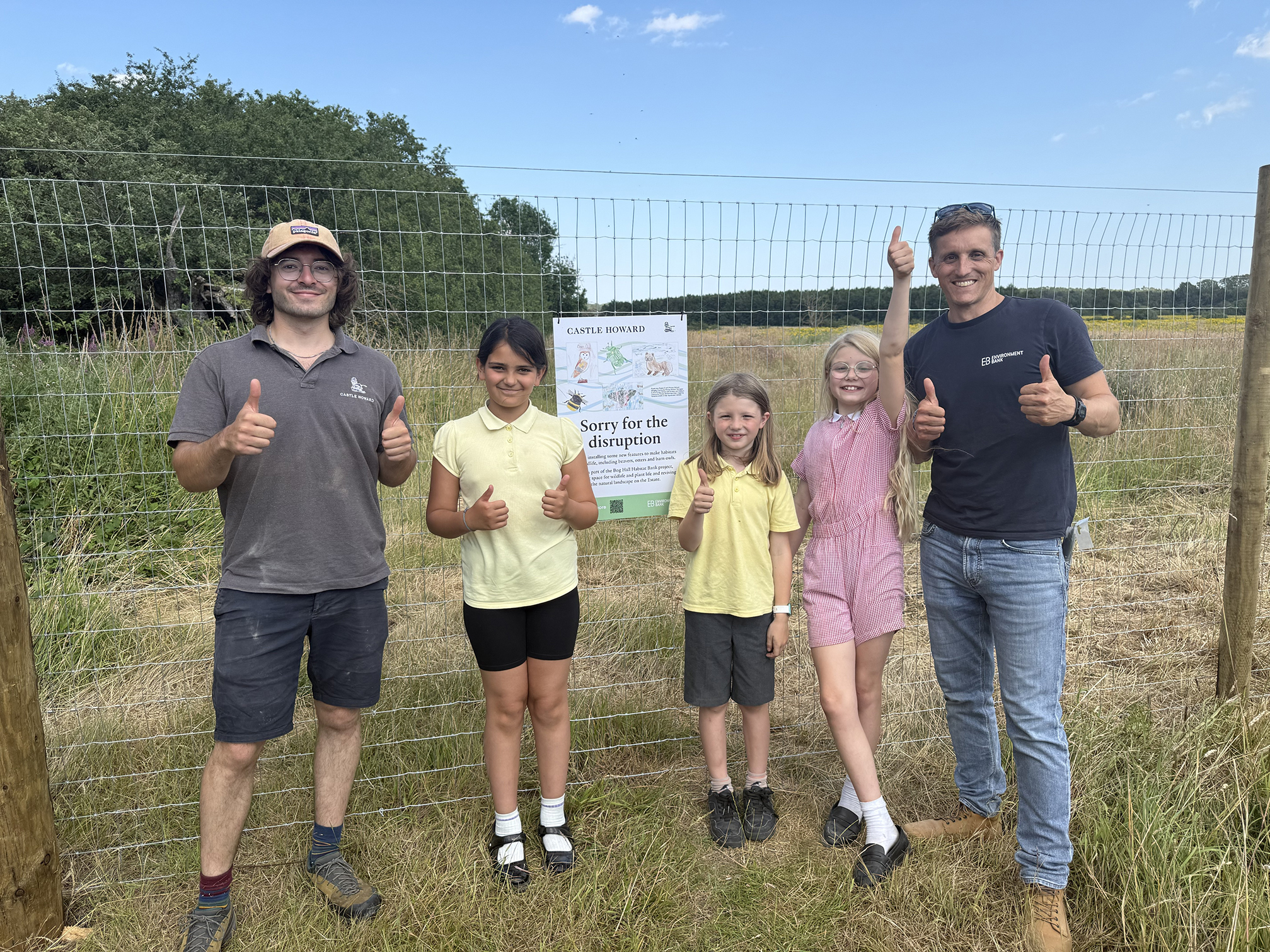
North Yorkshire school pupils seeing their drawings on the fence signage. Photo by Environment Bank
The all-female White Park cattle herd has taken up residence inside the project area. The animals will live outside year-round and are well suited to outdoor conservation grazing, including in wetter grassland habitats. The ancient breed is priority-listed by the Rare Breeds Survival Trust, which describes White Park cattle as ‘likely the most ancient native cattle in the British Isles’. Their grazing will help create a more varied habitat structure, supporting the project’s wider conservation aims.
The Bog Hall Habitat Bank project was announced in autumn 2024. In the first two years, the Castle Howard Natural Environment team, with the support of a team of award-winning Conservation Volunteers, has restored meadows now rich in yellow rattle, created scrub banks to protect young saplings, and installed ponds and leaky dams to begin holding more water across the site. The team has also erected 5 kilometres of fencing ahead of the release of beavers this autumn, incorporating badger tunnels and otter passes to maintain safe routes for wildlife through the project area.
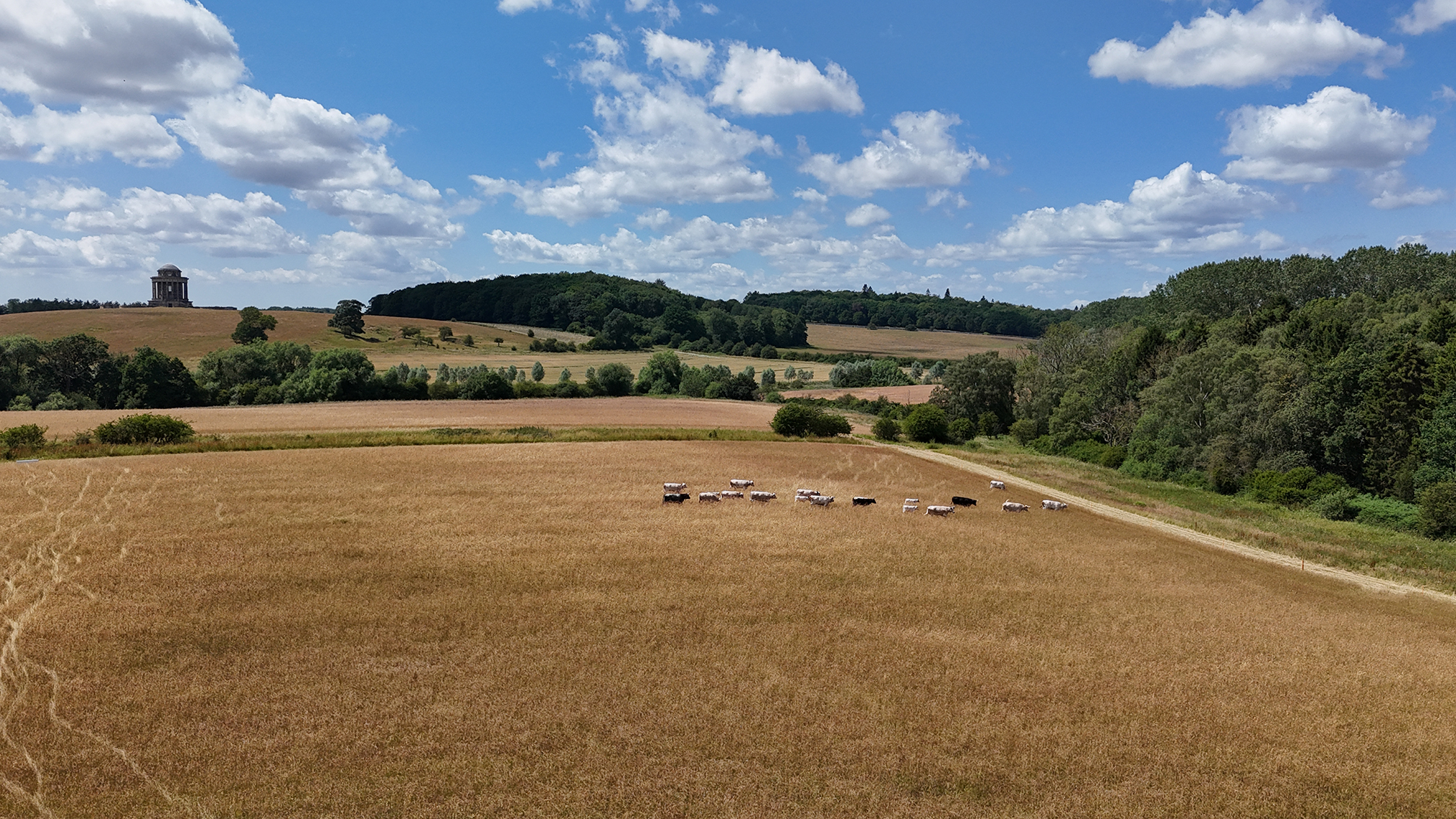
White Park cattle at Castle Howard. Photo by David Scott.
Guy Thallon, Castle Howard’s Head of Natural Environment, said: “Welcoming the White Park herd is a wonderful moment for the Bog Hall project – it was really exciting for us to see them happily exploring their new home.
We’re now working towards releasing beavers into the project area this autumn, which will be a truly amazing moment. The Conservation Volunteers have been preparing the site by creating ponds and planting willow. We can’t wait to see the positive impact of nature’s engineers in the coming years.
Reintroducing animals to this area has been inspiring for the whole Castle Howard team and beyond, with local schools also getting involved. Our project partners Environment Bank invited local schoolchildren from Welburn Community Primary School, Slingsby Community Primary School and Terrington C of E Primary School, to draw the animals they would like to see in the Bog Hall Habitat Bank project area in the future, and their drawings have been added to the signage on the fencing.”
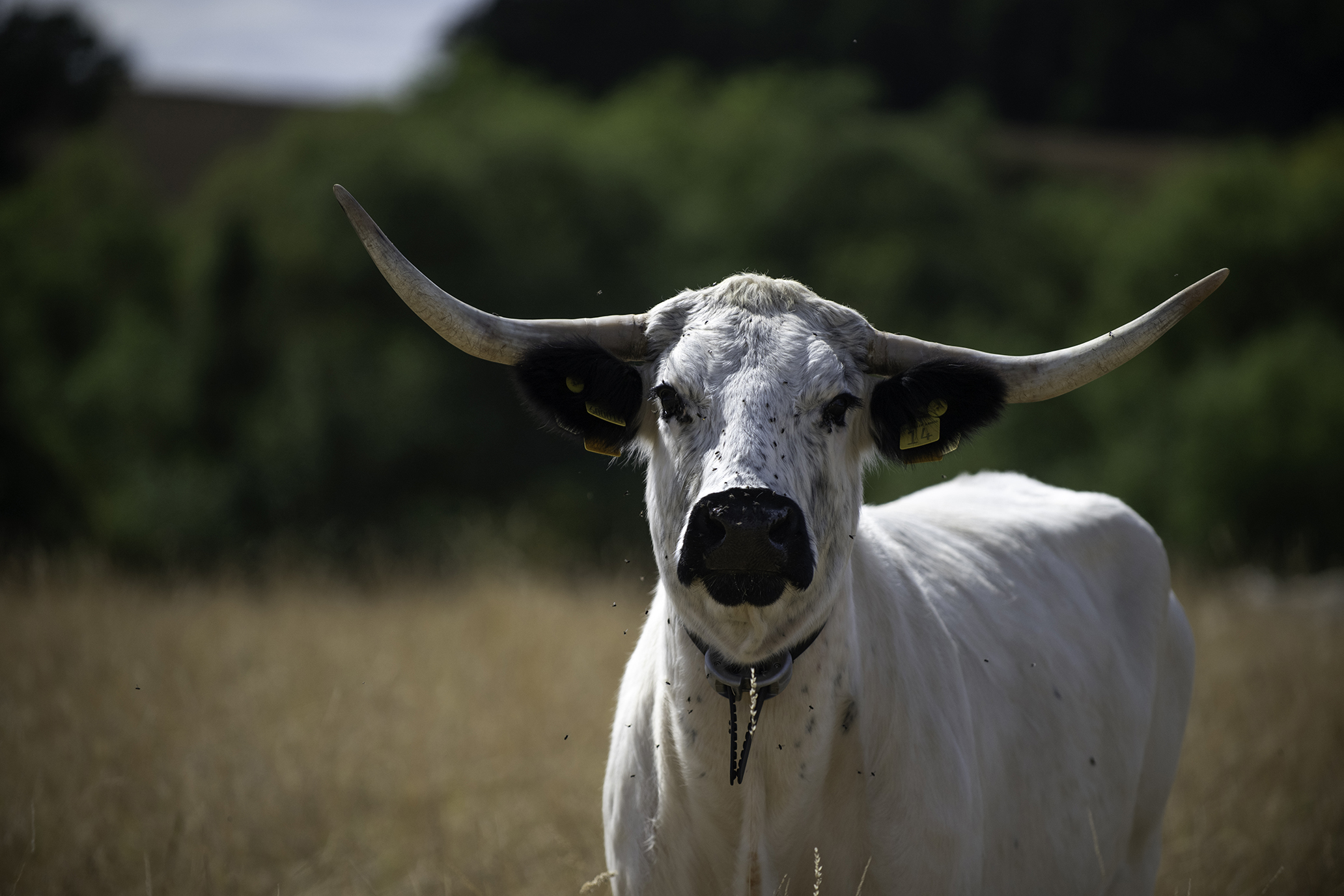
White Park cattle. Photo by Nick Howard.
Fraser Rutherford, Head of Marketing at Environment Bank, said: “The project gives local children a rare opportunity to follow nature restoration throughout their school years and see first-hand how native wildlife returns to a landscape. We invited pupils from Welburn and Slingsby Community Primary Schools and Foston and Terrington C of E Primary Schools to draw the animals they hope to see at Bog Hall Habitat Bank in years to come, and their drawings now appear on signage along the new fencing.”
Find out more: castlehoward.co.uk
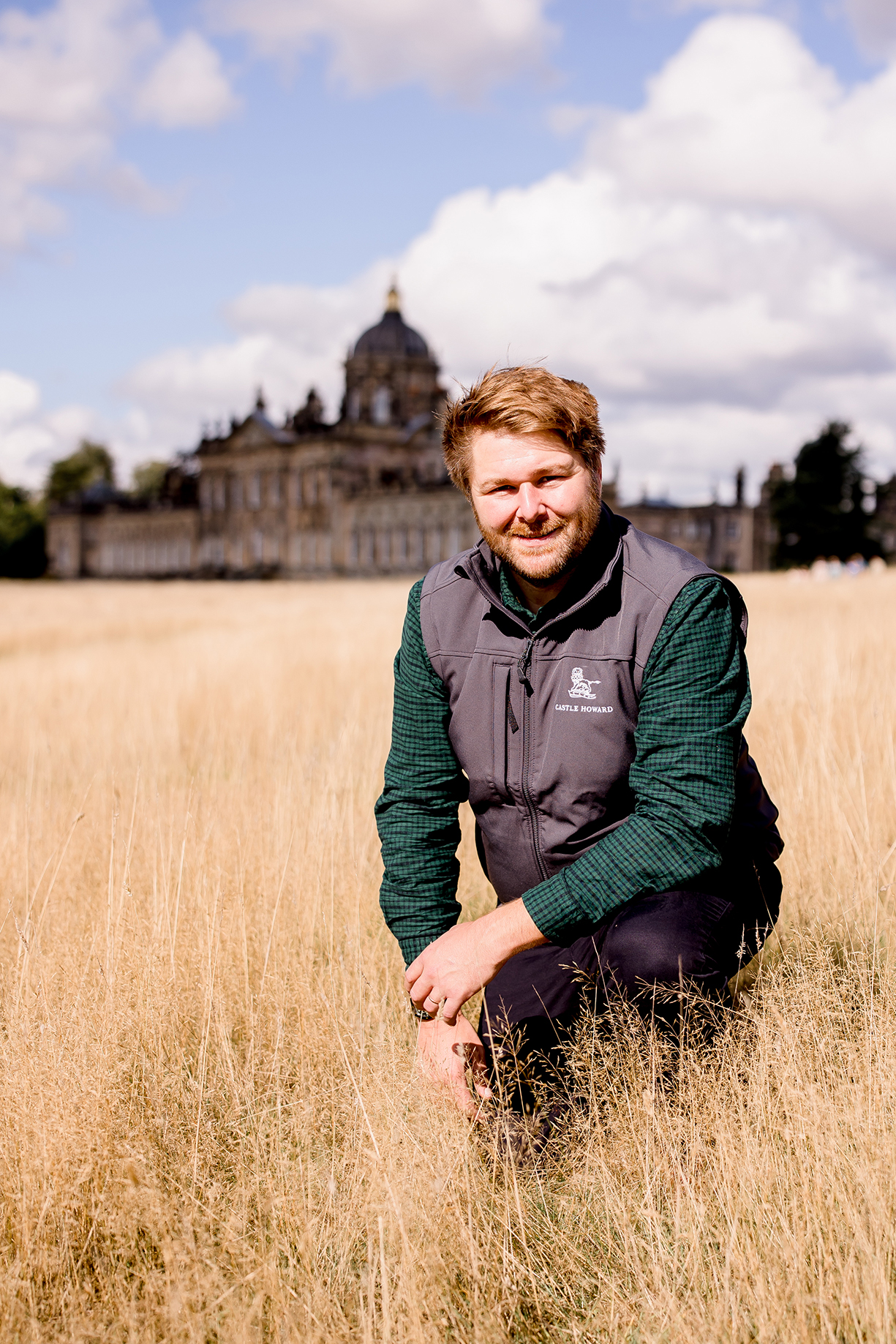
Castle Howard’s Head of Natural Environment, Guy Thallon. Photo by Emma Raye