
£1.2m project to uncover Industrial Revolution’s impact on health
A ground-breaking £1.2 million international research project led by the University of Bradford will investigate how the Industrial Revolution affected human health across Britain and the USA.
‘Dead and Buried: Investigating changes in health during the Industrial Revolution using documentary records and human skeletal remains’, a three-year project between Bradford and SUNY Plattsburgh, the state university of New York, will combine bioarchaeological data from 20,000 human skeletal remains with historical records to explore mortality, chronic illness, and the lived experience of people during the Industrial Revolution of the 18th and 19th centuries.
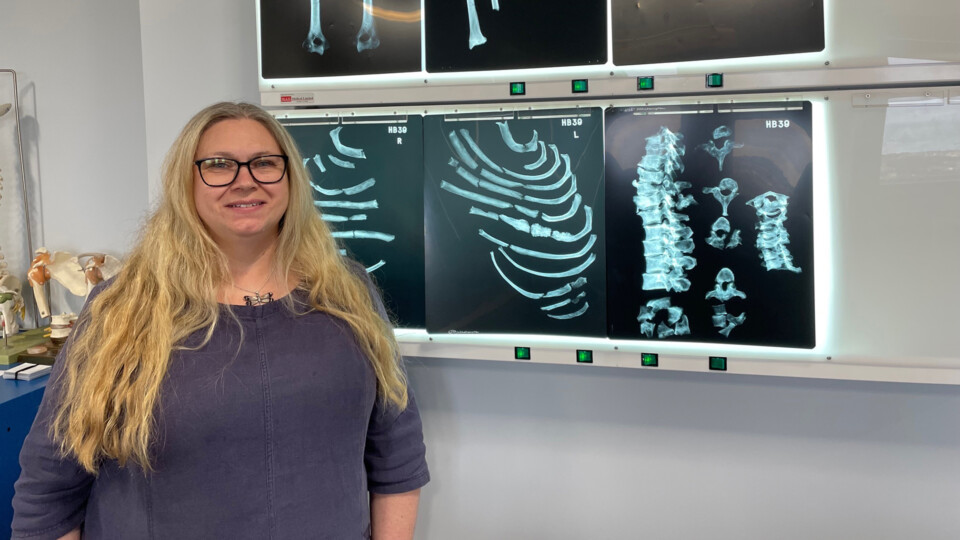
Dr Jo Buckberry, project leader from the University of Bradford’s School of Archaeological and Forensic Sciences, said: “This is an amazing opportunity to develop a more detailed understanding of health at a crucial time in our history, when populations grew in size, individuals moved to towns and cities, and many processes became mechanised, giving rise to the landscape and buildings that shape Britain today.
“These changes, and public health acts that followed, had a profound and lasting effect on our wellbeing.”
How Dead and Buried will work
The Dead and Buried project aims to answer questions about the health risks posed by industrialisation, including the effects of urbanisation, social status, and environmental factors. It will also look at the effects of periods of epidemic during this period, including cholera.
Dr Buckberry says tuberculosis (TB), one of the biggest killers among people during the Industrial Revolution, is a big challenge to the research project as it is hard to trace in skeletal remains – only five to seven per cent of individuals with TB develop skeletal lesions.
Using Geographic Information Systems (GIS), a digital method for looking at spatial relationships between datasets, researchers will map patterns of disease and death across rural and urban landscapes, comparing trends between the UK and US.
Led by Dr Buckberry, Dr Gillian Crane-Kramer and Dr Justin Lowry, both from SUNY Plattsburgh’s Department of Anthropology, the team will analyse data from more than 20,000 excavated burials in England, and historical death records from 1837 to 1890
Dr Crane-Kramer said: “Following on from our previous work on changes in health with the Industrial Revolution in England, Dr Buckberry and I wanted to see if there were similarities and differences in the process between England and the U.S. given there is about a 70-year delay in the commencement of the Industrial Revolution between them.
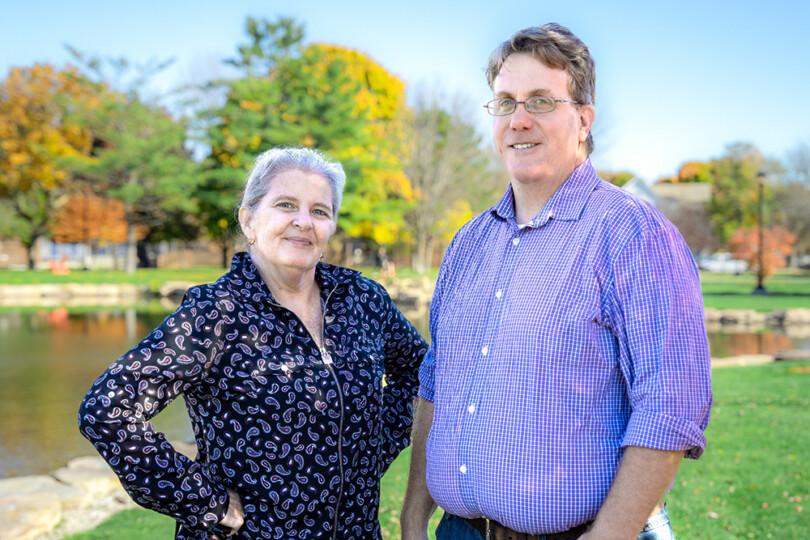
Dr Gillian Crane-Kramer and Dr Justin Lowry, both from SUNY Plattsburgh’s Department of Anthropology, who are both part of the Dead and Buried research project team. Images credit: University of Bradford and SUNY Plattsburgh
Did the Americans approach certain issues differently? Did they learn from British mistakes? Was the focus different?”
Despite the bulk of the research taking place among UK records from the time, researchers are keen to discover what was happening in the USA during the Industrial Revolution.
The study, which starts in the new year (2026), will access unpublished datasets from major archaeological units and census records to build the most comprehensive database of industrial-era health to date.
The project has been co-funded by UK Research and Innovation (UKRI) Arts and Humanities Research Council (AHRC) and US National Science Foundation (NSF), Social, Behavioural and Economic Sciences Directorate (SBE).
What was the Industrial Revolution?
The Industrial Revolution, between 1750 and 1900, was the process of change from home-based production to factory manufacturing work in factories, aided by new technology including the steam engine, which helped to transform society. The process started in the UK, eventually spreading to other parts of the world.
Bringing research up to date
Working with Historic England, Dead and Buried’s research will further develop policy around analysis of human remains from the Industrial Revolution.
Simon Mays, Senior Human Skeletal Biologist at Historic England, serves on the Advisory Panel for the project and is collaborating with researchers to maximise the impact of their work in the heritage sector.
The project supports the United Nations’ sustainable development goals by highlighting the importance of public health measures and infrastructure.
It will also help inform public health policy, heritage management, and education. Outreach activities including workshops for schoolchildren at the Thackray Museum of Medicine in Leeds will take place.
It builds on a completed pilot study, ‘An Examination of Changes in Human Morbidity and Mortality with the Advent of the Industrial Revolution’, funded by the Royal Society in 2018.
The Dead and Buried project supports the University of Bradford’s strategy by delivering impactful research that improves understanding of public health and social history. It strengthens international collaboration and contributes to education and policy, aligning with the university’s goals around global engagement, wellbeing, and societal benefit.