
City of York Council set to expand smoke control area to improve air quality and health
City of York Council is set to approve plans to expand the Smoke Control Area (SCA) to cover the entire city, in a major step towards cleaner air and healthier communities, at a meeting next week.
Currently, 80 per cent of York’s households are within an SCA. The new citywide approach will ensure consistent rules for all residents, helping to reduce harmful smoke emissions from solid fuel burning – a major contributor to fine particulate matter (PM2.5) pollution.
PM2.5 is an invisible killer, linked to serious health conditions including asthma, lung cancer, and heart disease. In York, exposure to PM2.5 is estimated to contribute to the equivalent of one in every 23 deaths.
The proposed expansion doesn’t mean solid fuel burning is banned. In a Smoke Control Area, it is an offence to emit prolonged smoke from a chimney of a building – residents can continue to use stoves and open fires, provided they follow the rules:
- Burn correctly seasoned dry wood in DEFRA-approved stoves. Or
- Use authorised smokeless fuels in open fires or non-approved stoves.
The ‘Ready to Burn’ mark helps to easily identify solid fuels that are legal to burn at home.
The changes will come into effect no sooner than six months from the date of the order, giving residents time to prepare. Enforcement will focus on education first, with penalties only as a last resort.
Councillor Jenny Kent, Executive Member for the Environment and Climate Emergency: “Expanding the Smoke Controlled Area will make York a healthier place for everyone, ending the postcode lottery for clean air and applying the same rule across the City. This is not about banning stoves or open fires, it is about burning the right fuels in the right way and helping to protect our children, elderly and vulnerable neighbours.”
Dr Caroline Everett, a Respiratory Consultant at York and Scarborough Teaching Hospitals NHS Foundation Trust, commented: “I know that many of the respiratory conditions I see in my patients, such as asthma and COPD, are worsened by poor air quality. PM2.5 particles from wood smoke can penetrate deep into the lungs and bloodstream, increasing the risk of heart disease and cancer as well. We also know that these particles are linked to asthma in children, whose lungs are still developing and are therefore more vulnerable to the effects of air pollution.
“These changes to the Smoke Control Area in York will ensure that we all have cleaner air to breathe and will help prevent avoidable illness, keeping people with respiratory conditions healthier and able to live fuller lives for longer.”
Peter Roderick, Director of Public Health for York, said: “Solid fuel burning accounts for nearly a third of PM2.5 emissions in York. There are no safe levels of these particles – they harm everyone, especially children and older people. Expanding the Smoke Control Area is a proportionate, evidence-based step to protect health and reduce preventable deaths.”
Charlotte Freeman, on behalf of Parents for Future York, said: “Wood burning can make homes cosy and warm, but it’s also the most polluting way to heat our homes. Particles which are too small to see, known as PM 2.5 are emitted, which then enter our lungs, blood stream and other organs.
Air pollution adversely impacts human health throughout the life course. But children are particularly vulnerable, because exposure to air pollution during gestation, infancy, childhood, and adolescence affects developing organs, and increases the risk of chronic disease in adulthood.
“Expanding the Smoke Control Area is a step in the right direction, to reduce the inhalation of air pollution. This won’t mean people can’t use log burners anymore, but instead, must check that the correct fuel is being used, in the correct way.”
For more information, visit www.york.gov.uk/SmokeControlAreas or to find out more about the Executive meeting visit: Agenda for Executive on Tuesday, 3 March 2026, 4.30 pm
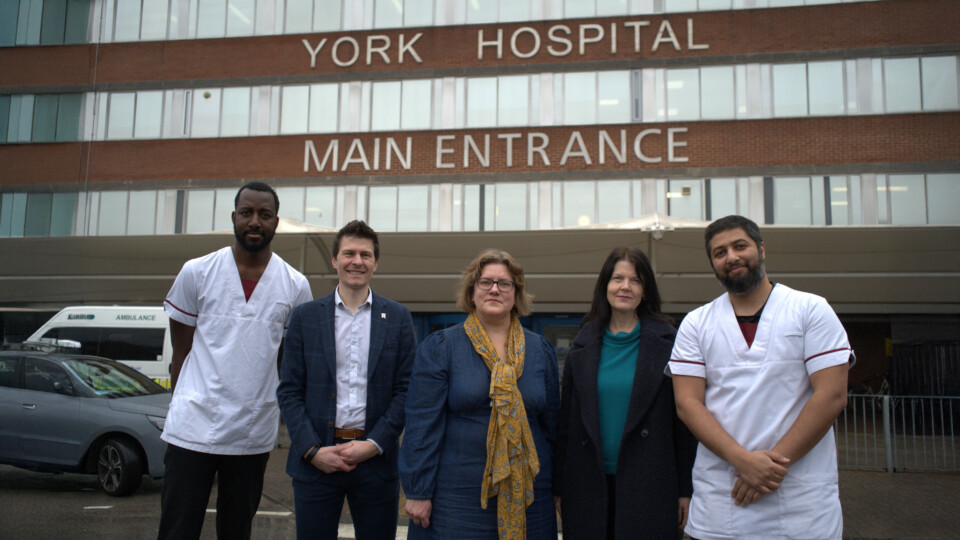
Photo caption (above): L-R – Calvin – Respiratory Clinical Scientist, Peter Roderick – Director of Public Health at City of York Council, Dr Caroline Everett – Consultant Respiratory Physician, Cllr Jenny Kent – Executive Member for Environment and Climate Emergency, Muhammad, Lead Clinical Respiratory Scientist