
The Link Between Fuel and Food
When people talk about the cost of living, they talk about energy bills, mortgages and wage stagnation. Rarely does the conversation land on fuel. And almost never does it land on the cold chain that moves food from producer to plate. That invisibility is part of the problem.
I want to make the connection explicit, because it is a direct one, and it matters.
When Fuel Goes Up, Food Goes Up
The relationship between fuel costs and food prices is not complicated. When fuel costs rise, delivery costs rise, and the price of food follows. Every stage of that chain passes the pressure forward, and it lands, finally, with the person standing in the supermarket aisle deciding what they can and cannot afford this week.
That person does not see the fuel price spike that started it. They see the number on the shelf.
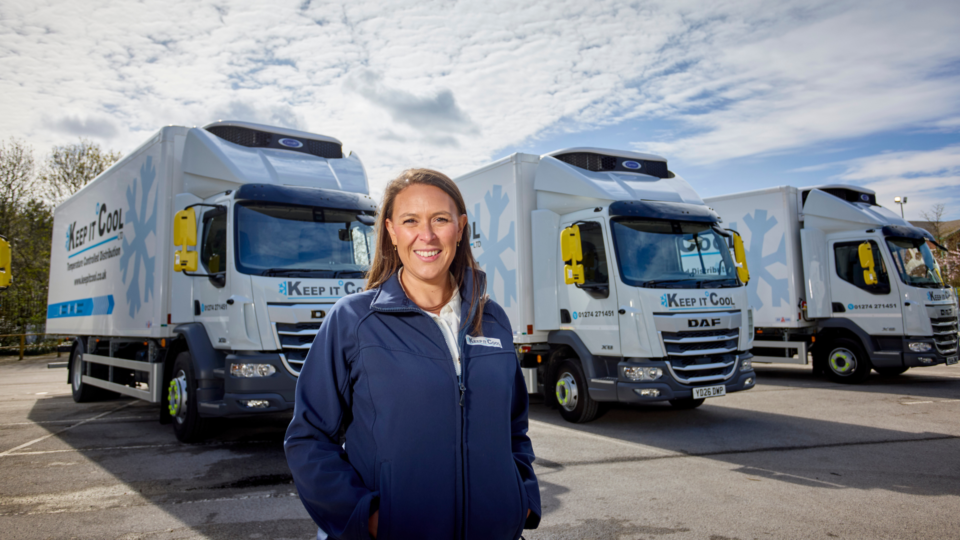
For operators like Keep It Cool, fuel sits at between 25% and 50% of our total running costs. Those costs can be absorbed by the business, or passed on to the customer, who passes them on to the retailer, who passes them on to the consumer. There is no stage in this chain where the pressure simply disappears. It keeps moving forward until it has nowhere left to go.
The Numbers Behind the Headlines
Government published research shows that in January 2025, 13.9% of households in the UK were food insecure, meaning they ate less, or went a full day without eating, because they could not access or afford food. That figure was recorded before the current fuel crisis began accelerating cost pressures across the supply chain.
In the same report, 91% of adults who reported an increase in their cost of living said the price of their food shopping had gone up. 40% had started spending less on essentials, including food. These are not people in extreme or unusual circumstances. These are ordinary households, making cuts in ordinary kitchens, because the system that moves food around this country is under pressure, and that pressure is not being adequately addressed. According to the Food Foundation, since April 2022, the price of a basic weekly food basket has risen by more than 27%. Fuel cost increases layered on top of that trajectory do not just affect operators’ margins. They push food further out of reach for the households already closest to the edge.
This Is a Food Security Issue
I run a refrigerated transport business. I am not a policymaker, and I am not pretending to have all the answers. But I am someone who moves food around this country every single day, and I can see clearly what happens when the cost of doing that becomes unsustainable.
Food stops being affordable before it stops moving. The people who feel that first are not boardrooms or logistics managers. They are families who were already making difficult choices before fuel prices spiked, before food inflation compounded, before the cost of living became the defining conversation of our time.
If the government is serious about food security, child poverty and the cost of living, it cannot continue to treat transport as a peripheral concern. The cold chain is not a commercial convenience. It is a critical national infrastructure. The food it carries gets political attention. The people and businesses keeping it moving deserve the same.
What Needs to Change
I have already written to our local MP, Judith Cummins, with a set of practical, targeted requests, from an immediate review of fuel duty for commercial vehicles to stronger oversight of fuel market pricing and a commitment to payment terms that support cash flow across the supply chain. She raised those points with both the Chancellor and the Secretary of State for Energy Security and Net Zero on the same day.
That is a start. But a conversation is not a policy, and a policy is not relief for the operator filling up the tank this morning, or the family looking at food prices this weekend.
The link between fuel and food is real, it is measurable, and it is affecting people right now. And it is time for that to be treated with the urgency it deserves.
About Keep It Cool
Keep It Cool is a specialist refrigerated transport business serving B2B food businesses across the UK. Operating 24 hours a day, seven days a week, the business provides dedicated same-day temperature-controlled transport with no consolidated loads, no contracts and no compromises.
Founded in 2014 by Managing Director Nikki Redhead, Keep It Cool has grown from a standing start to a £3 million operation, built on reliability, responsiveness and a team that takes responsibility when it matters most.