

Bradford researchers discover new way to treat deadly disease often diagnosed too late
Researchers at the University of Bradford have identified a promising new approach to treating a rare but devastating form of hypertension that affects around 7,000 people in the UK.
The discovery, published in Research Connections, could pave the way for new treatments for Pulmonary Arterial Hypertension (PAH), a progressive disease that causes blood vessels in the lungs to narrow, placing strain on the heart and significantly shortening life expectancy.
Scientists from the University’s School of Pharmacy, Optometry and Medical Sciences have found that a naturally occurring compound called cryptolepine, along with related compounds, may help correct the underlying biological defects responsible for the disease.
Unlike many conditions, PAH is often difficult to diagnose because symptoms such as breathlessness, fatigue and chest pain are common to a range of illnesses. By the time some patients receive a diagnosis, the disease may already be advanced.
Encouraging results
Led by Associate Professor Md Talat Nasim, the research builds on more than a decade of work investigating the genetic causes of PAH.
Dr Nasim said: “This research represents an important milestone in a journey that began for us in 2014. Pulmonary Arterial Hypertension is a devastating disease that can have a profound impact on patients and their families.
“Many people experience symptoms that appear relatively common, which means diagnosis can often come much later than anyone would wish. For some patients, the outlook following diagnosis can be extremely challenging”.
“Our research has identified compounds capable of correcting signalling defects that sit at the heart of the disease. While there is still a long way to go before this could become a treatment for patients, the results are extremely encouraging and provide a strong foundation for further development.”
PAH is linked to mutations affecting a gene known as BMPR2, which disrupts critical signalling pathways that regulate how cells grow and function. The Bradford research found that cryptolepine was able to restore balance to these signalling pathways, reducing harmful cell behaviour associated with the disease.
The team has secured intellectual property protection for its discovery and is now seeking to advance the work through pre-clinical animal studies with the long-term aim of progressing to human clinical trials.
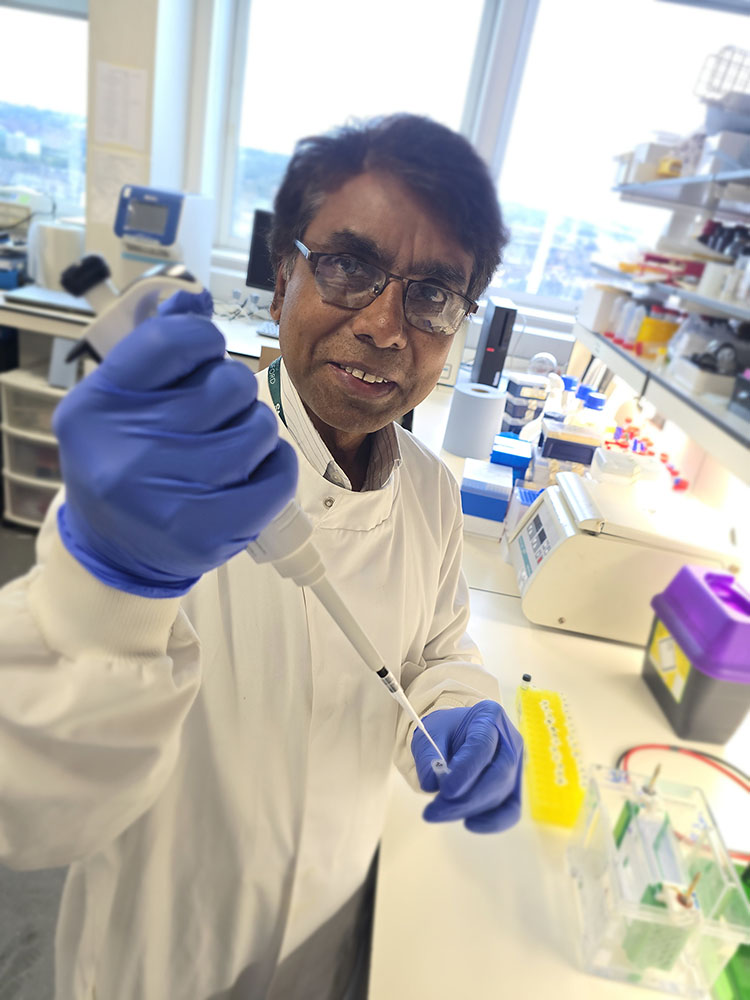
Image: Associate Professor Dr Talat Nasim, from the University of Bradford. Credit: University of Bradford.
Ideas that change lives
Professor Nasim added: “Research begins with curiosity but its ultimate purpose is improving lives. Discoveries such as this demonstrate how fundamental science can lead to entirely new possibilities for tackling diseases that currently have limited treatment options.
“It is a powerful example of how ideas can change lives, giving hope that future generations of patients may benefit from earlier and more effective interventions.”
The research was published in Research Connections under the title Attenuation of bone morphogenetic protein (BMP) and transforming growth factor beta (TGFβ)-mediated signalling defects using cryptolepine and halogenated analogues in Pulmonary Arterial Hypertension (PAH).