
Smart concrete could pave the way for wirelessly charging EVs as they drive
Researchers at the University of Bradford are developing WattCrete, an innovative ‘smart concrete panel technology’ that significantly improves power transfer efficiency while electric vehicles charge up in motion.
Professor Ashraf Ashour and Dr Boğaçhan Başaran, from the University’s Department of Engineering, have been awarded £236,000 by the Horizon Europe Marie Skłodowska-Curie Postdoctoral Fellowship to develop High Magnetic Permeability Concrete, otherwise known as WattCrete.
The project aims to tackle one of the major challenges facing dynamic wireless charging technology: the severe energy losses during transmission, (quite literally) paving the way to recharge cars efficiently on the move and dramatically extend their range.
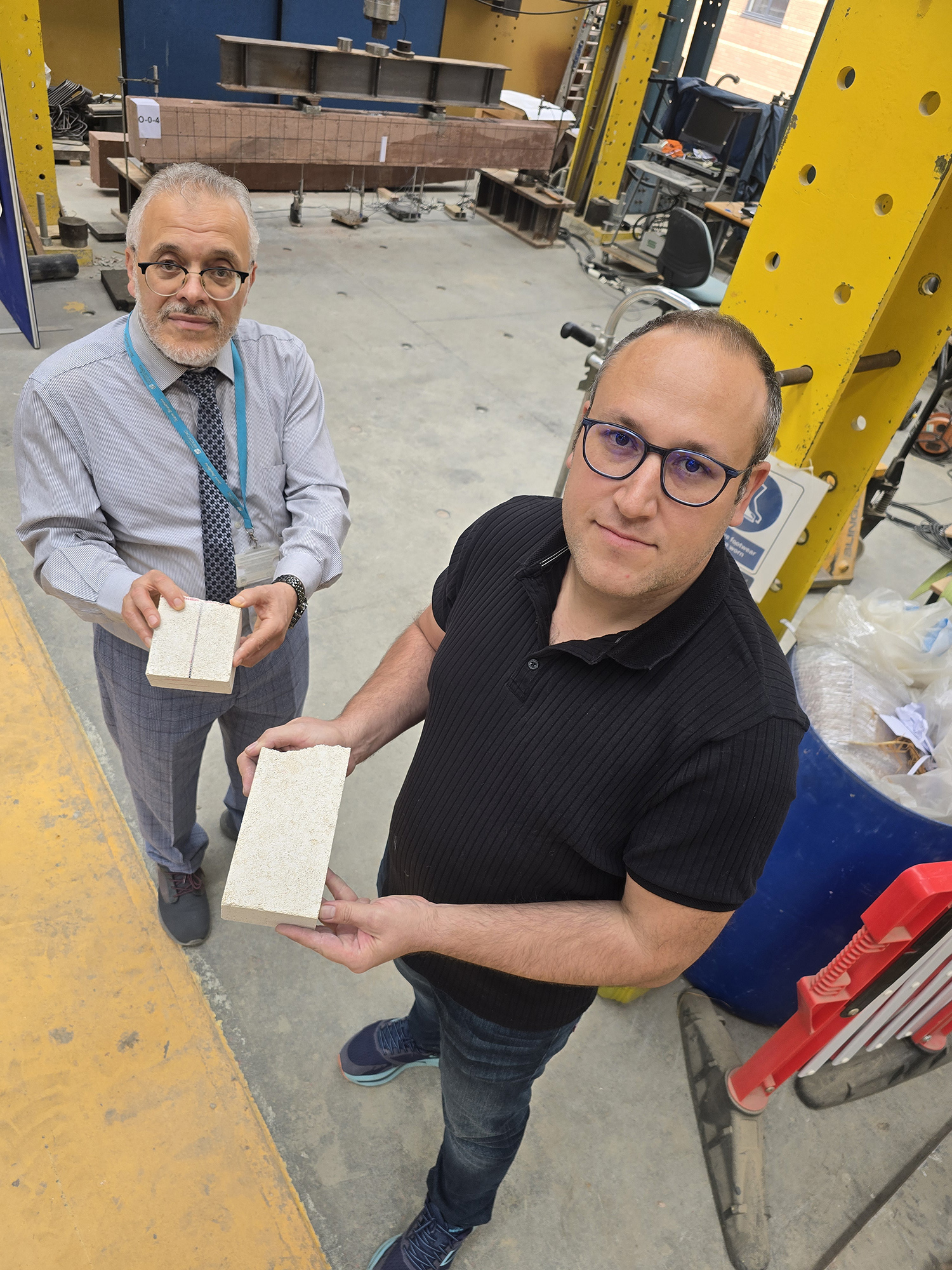
Credit: University of Bradford.
Future transport
Professor Ashraf Ashour, Professor of Structural Engineering at the University of Bradford and the project’s supervisor, said:
“The transition to electric vehicles is essential if we are to reduce greenhouse gas emissions and achieve net zero ambitions. However, challenges around charging infrastructure remain one of the biggest barriers to widespread adoption.
“This project explores whether the road itself can become part of the solution. By developing new forms of concrete panels that help improve wireless power transfer, we hope to contribute to technologies that could make charging systems more efficient, more sustainable and ultimately more practical for future transport networks.
“What makes this particularly exciting is that it brings together expertise from civil engineering, materials science and electrical engineering to address a real-world challenge with global relevance.”
Credit: University of Bradford.
How does it work?
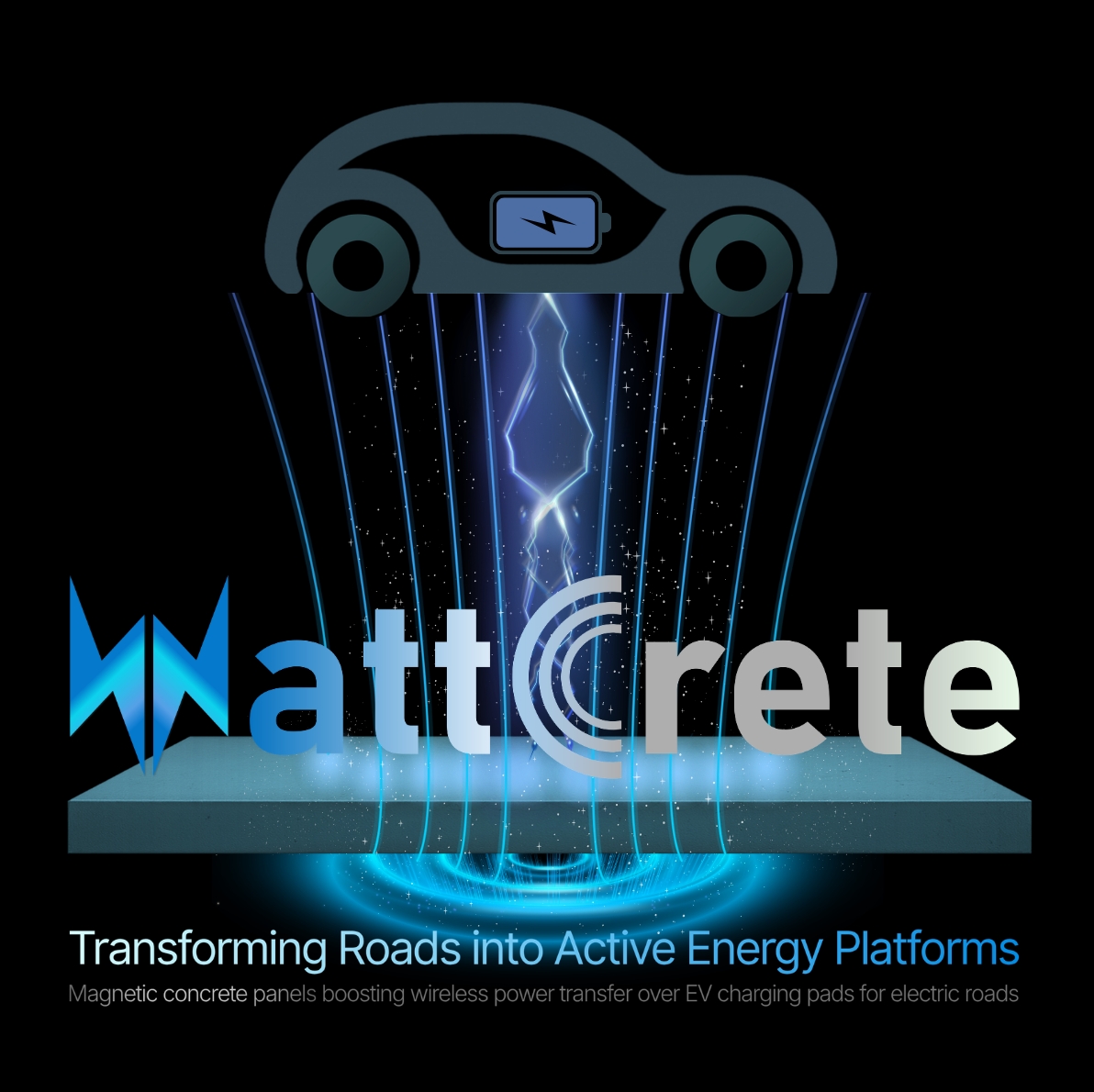
Wireless charging systems work by transferring power between charging pads embedded beneath the road surface and receiving units mounted on vehicles. However, standard concrete and asphalt that sit between them act as a barrier to magnetic energy, causing valuable energy to be lost during transmission.
The Bradford research seeks to address this problem by developing innovative high magnetic permeability concrete panels (WattCrete) to help optimize to optimise the flow of magnetic energy between charging systems and vehicles while minimizing these losses.
Researchers estimate that even small improvements in efficiency could have a significant impact on the cost and viability of future wireless charging infrastructure. The project will investigate whether specially engineered concrete panels can increase wireless power transmission efficiency while remaining practical and cost-effective for large-scale roadway integration.
The project also aims to develop predictive models that could help engineers optimise future road designs and maximise charging efficiency. Researchers believe the technology could support future generations of electrified transport infrastructure while helping reduce energy losses and improve the sustainability of electric vehicle networks.
The research forms part of the University’s wider work on sustainable infrastructure, advanced materials and technologies that support the transition to a low-carbon future.