
Growing pressures on the UK’s cold chain are increasing risks to food security
Earlier this year the Cold Chain Federation (CCF) launched a major new whitepaper at an event in Westminster. The extensive document warns that growing pressures on the UK’s cold chain are increasing risks to food security, public health and economic resilience.
At a macro level, the paper sets out the cold chain’s role in food security and resilience and how current food security policy fails not only the cold chain but also leaves UK citizens at risk. The paper also covers at length how the cold chain is under increasing threat from issues such as cold storage capacity, key workers and labour shortages alongside climate, trade and even cyber-security.
The paper is not new news to anyone working in the cold chain day-to-day, but it is a clear call to the people in power to do more to protect the people of this industry and to create the right structures to support our work today, tomorrow and into the future.
Recognising that the cold chain exists
In its opening section, the paper highlights the ten urgent steps the government needs to take to protect citizens’ access to essential food.
The first three steps focus on government recognition of the critical role the cold chain plays in food security and resilience. For example, cold chain infrastructure, including major cold stores and transport hubs, currently has no clear designation as critical national infrastructure.
To support this, the paper suggests mapping the sector through a National Risk Register to assess current and future requirements and vulnerabilities. The register would also provide advice to local authorities on how to assess cold chain resilience in their district and support cold chain development to ensure their communities, including the most vulnerable, continue to have access to essential products during any major disruptions.
As part of its call for government recognition, the paper also calls for cold chain workers, including refrigerated drivers, to be given permanent essential worker status.
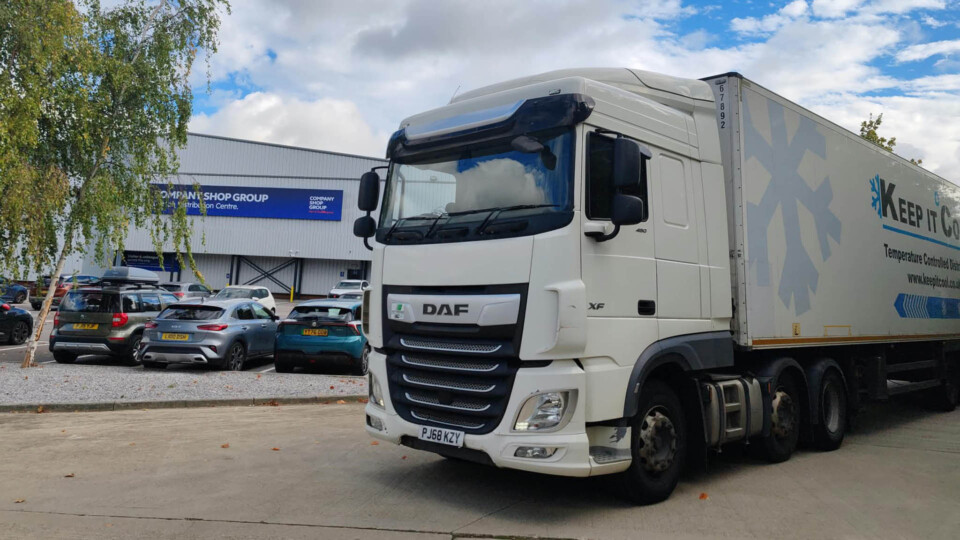
As none of this currently exists, when planning for a crisis, our part in the food system becomes invisible. We move product 24 hours a day, seven days a week, and yet our industry is not formally recognised as a key part of the infrastructure that keeps our country fed. Put simply, if a driver working for Keep It Cool cannot get to work during a future emergency because they are not classed as an essential worker, the impact lands with every customer relying on that delivery.
A plan for when things go wrong
Steps four to six call for clear government ownership of cold chain resilience, for them to support the cold chain in preparing, reacting and recovering from any threats to food supply.
To enable this, the report suggests the assignment of a dedicated cabinet officer that would be responsible for cold chain resilience and security. This would ensure a more proactive and less reactive response to any major disruptions, with stronger integration into national resilience and defence planning. Planning would include conflict-driven disruptions to food and energy supplies, future pandemics or major events of national importance, fuel shortages and infrastructure failure during extreme heat climate events or major flooding, to name but a few.
This matters directly to Keep It Cool because we do not have the reserves of a national operator. When there is a genuine supply shock, whether from a fuel crisis, a cyber-attack or a border disruption, we are managing the fallout in real time with no early warning and no established route to support. If we had a single government department taking ownership, with appropriate mechanisms for sharing intelligence with operators like us, would be the difference between reacting blind and reacting with information.
Building resilience into future policy, not bolting it on afterwards
The next four steps focus on embedding cold chain requirements into future food security policy, including stock levels, planning frameworks and support for the people doing this work.
It’s a very different problem when there’s no food on the shelves compared with a garden centre not having its full range of sheds in stock, but current policy does not reflect that difference. Without the cold chain being properly understood and planned for on its own terms, we’ll keep seeing unnecessary miles, unnecessary emissions and businesses like ours penalised for doing things the right way.
Why this needs our support
The cold chain keeps this country fed and keeps its medicines safe every single day, without most people ever thinking about it, and that works well when everything is calm. It doesn’t work with the same smoothness when something goes wrong, because right now, nobody in government is planning for that scenario with our sector properly in view.
Keep It Cool is one small operator among many. But small operators are the ones with the least capacity to absorb a shock, and the most to lose if one hits without warning. The Cold Chain Federation has done the work of setting out exactly what needs to change, and I’d strongly urge the people in power to take note and support the future of this essential industry.