
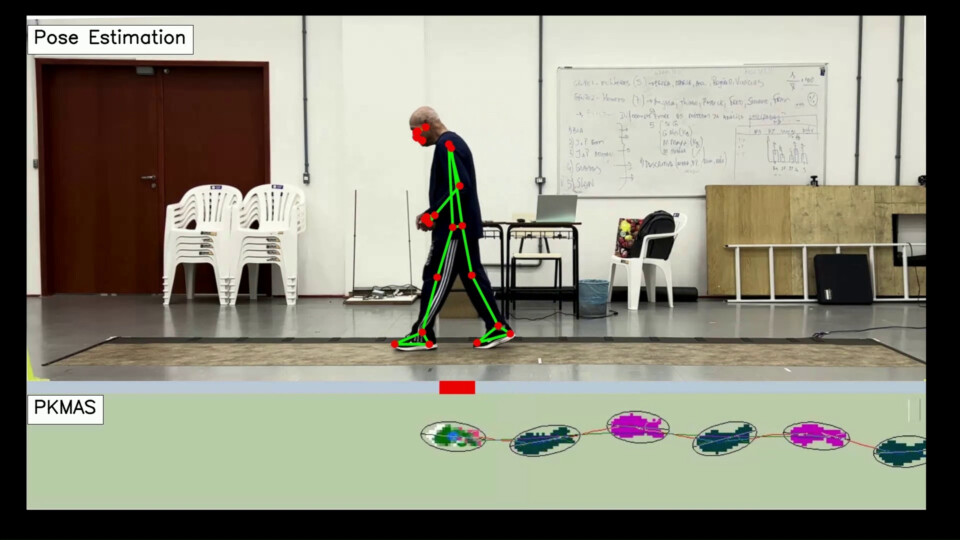
AI-driven movement analysis could transform early detection of Parkinson’s
An artificial intelligence (AI) system which could accelerate the early detection and monitoring of Parkinson’s, using smart phone video recordings, is being developed by the University of Bradford.
The project, led by Dr Ramzi Jaber, Researcher in Data Science for Applied AI at the University, and supported by clinicians at Leeds Teaching Hospitals NHS Trust and Hospital de Clínicas in Paraná, Brazil, focuses on analysing subtle movement abnormalities in people which often precede a formal Parkinson’s diagnosis.
What is Parkinson’s?
Parkinson’s is a progressive neurological disorder caused by the gradual loss of dopamine-producing neurons in the brain, leading to increased difficulties with movement and coordination. These symptoms typically manifest as tremors, muscle rigidity, balance impairment, and bradykinesia, a characteristic slowness of movement.
People living with Parkinson’s may eventually lose functional independence as the condition advances, compromising their ability to perform essential daily tasks.
Parkinson’s assessments rely on neurologists, who score patients using the Movement Disorder Society revision of the Unified Parkinson’s Disease Rating Scale (MDS-UPDRS), a 50-question assessment of motor and non-motor symptoms associated with the condition.
Assessment outcomes centre on clinicians’ visual interpretations of characteristic motor signs like bradykinesia. Routine motor examinations of people with Parkinson’s demand both experienced clinicians and long-term patient motivation.
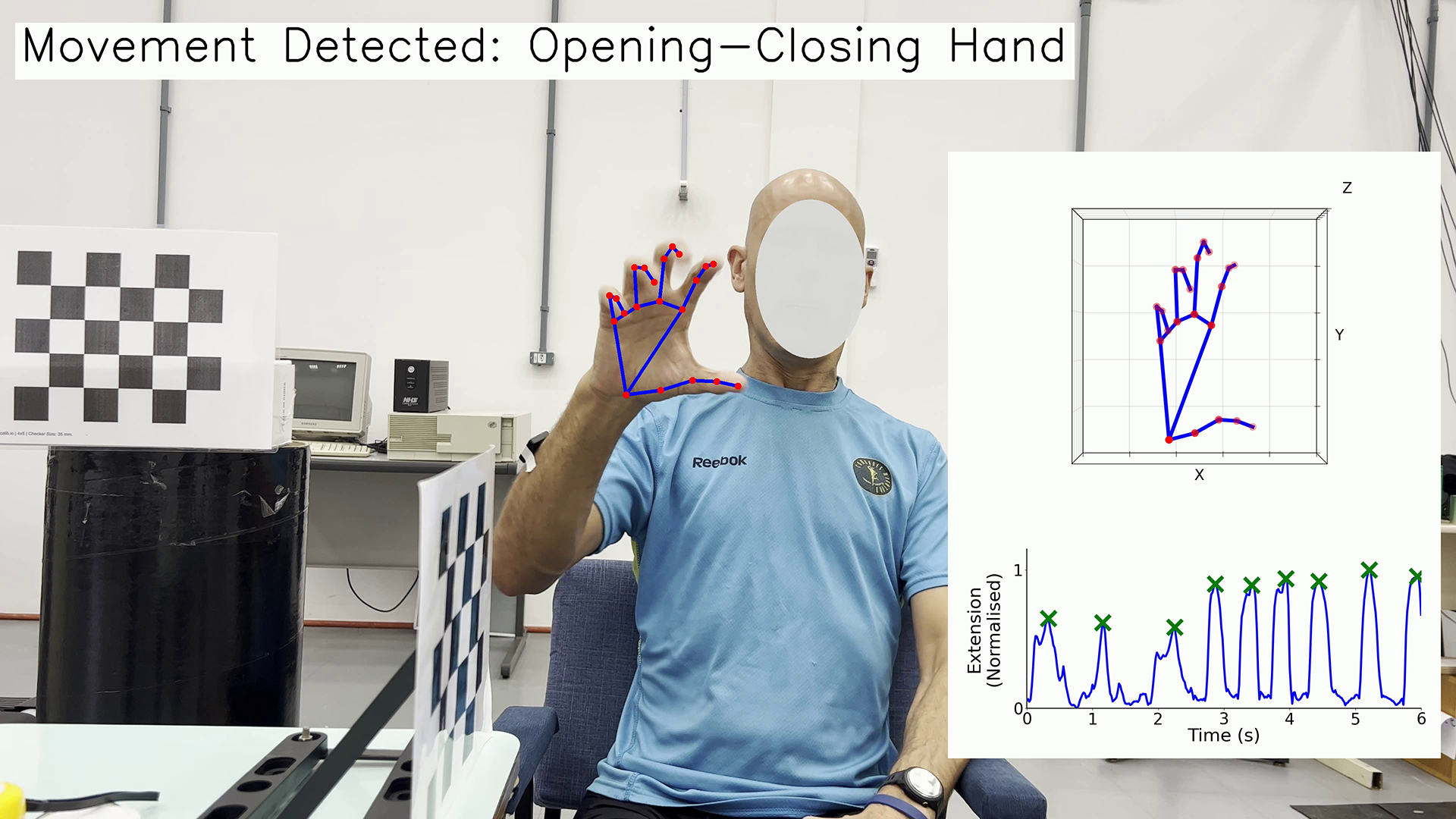
The hand movements of a person with Parkinson’s are recorded by University of Bradford researchers, using a camera to record a series of structured movement tests. Images credit: University of Bradford.
Early detection
Dr Jaber, who has conducted the research for his PhD studies, said: “One of the project’s initial aims was to enable remote detection of movement disorders from analysis of video recordings of a patient performing a range of movement tasks.
“Users could record videos on their smartphones of themselves performing these tasks and upload them to the cloud for analysis.
“By applying AI to these videos, we can transform subjective clinician judgement of movement abnormalities into objective data, allowing us to accurately track how Parkinson’s symptoms change over time.”
Using solutions including Google’s MediaPipe and custom-trained models built on patient datasets; the AI system can classify movement severity on the same five-point scale used by neurologists.
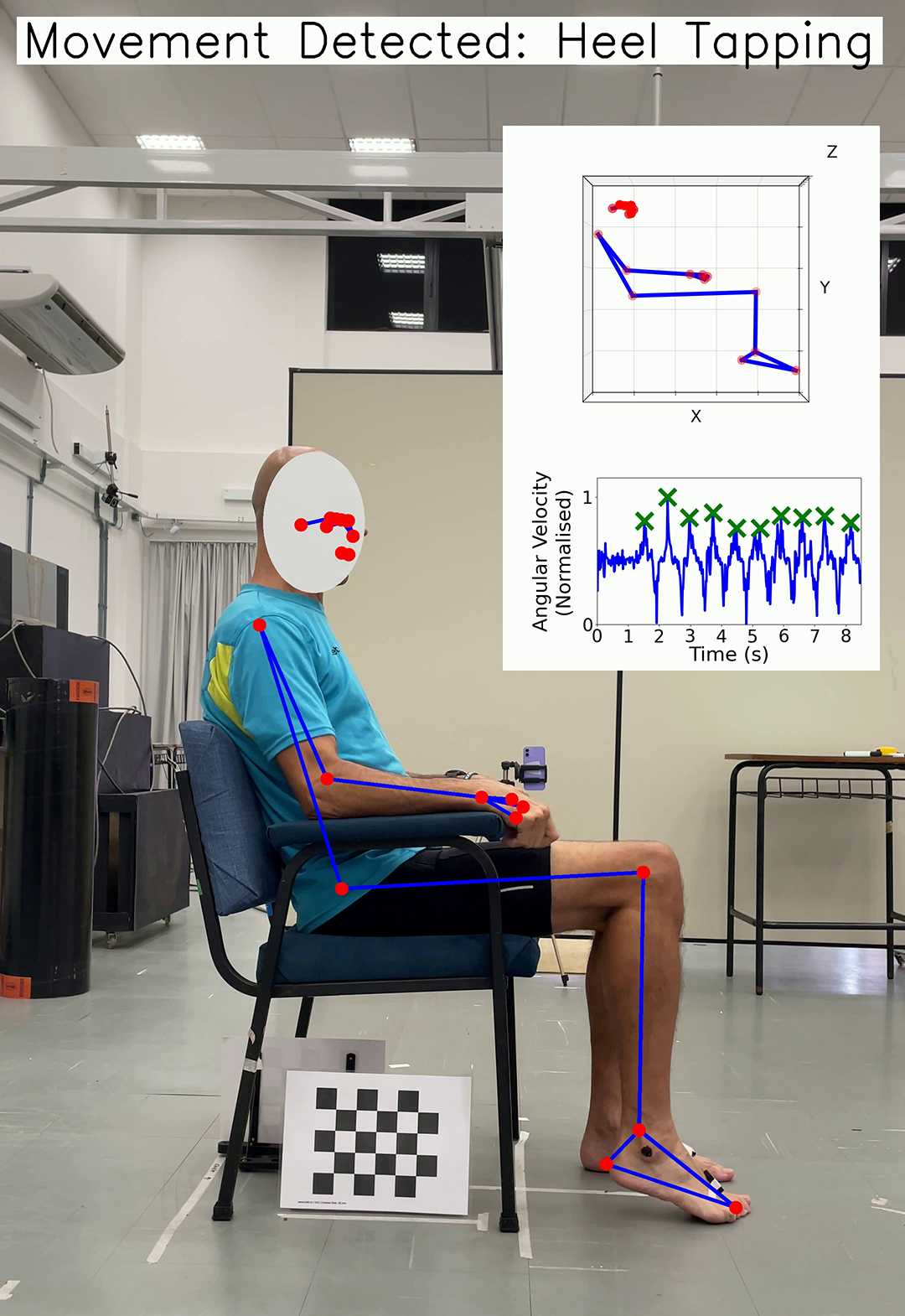
The heel tapping assessment is also used by University of Bradford researchers for their project on Parkinson’s. Images credit: University of Bradford.
How it works
The University of Bradford researchers, also including Dr John Buckley, Reader in Movement Biomechanics at the School of Computing and Engineering, have assessed older people and those living with Parkinson’s, using a camera to record a series of structured movement tests, including finger tapping (tapping the index finger against the thumb), wrist rotation, hand opening and closing, and heel or toe tapping while seated, the system then captures detailed motion metrics using computer vision technology and analysis.
Because having Parkinson’s is also associated with having an increased falls risk, the Bradford team are also developing an AI system that can be used to automatically assess lower-limb functioning and, in particular, the functional output at the ankle, which has been associated with a reduced falls risk.
The system developed uses computer vision to analyse a person’s movement and performance consistency in performing repeated up on the toes movements for 30 seconds. This ‘up on the toes’ 30-second test, can be performed safely in a small space and requires no specialised supervision.
Bradford researchers believe computer vision assessment of this single test could offer an alternative to traditional gait analysis, which requires more space, equipment, and clinical oversight to carry out. Videos would again be taken on an ordinary smartphone, uploaded to a cloud platform, and analysed remotely.
In trials, which started in 2019 with 120 participants using finger pinching and up-on-the-toes tests, the AI systems have shown potential not only for Parkinson’s detection but also for identifying fall risk in older adults.
Beyond early screening, the team says the system can be used for ongoing monitoring. For people with Parkinson’s, regular at home recordings could allow clinicians to track symptom progression or treatment response with far greater precision than occasional in clinic visits.
Similarly, for older adults with declining health status, at-home recordings could track changes in fall risk, so that any significant change in risk could trigger early interventions.
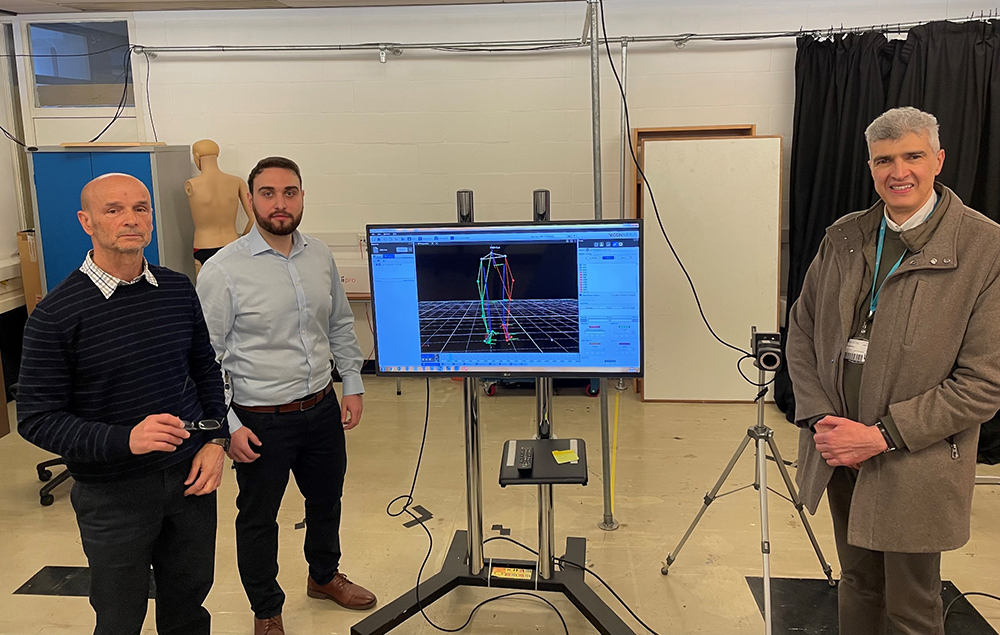
From left, Dr John Buckley, Reader in Movement Biomechanics; Dr Ramzi Jaber, Researcher in Data Science for Applied AI; and Professor Rami Qahwaji, Professor of Visual Computing, all from the School of Computing and Engineering. Images credit: University of Bradford.
Next steps for the research
Although the Leeds section of the research has paused, partnerships in Brazil remain active, with new patient videos continuing to feed into the system’s development.
The Bradford team hopes that, with renewed support, the technology could soon move closer to real world deployment, bringing faster diagnosis, more consistent monitoring, and potentially life changing early intervention.