

Bradford secures fifth #1 Social Mobility ranking amid rising national performance
The University of Bradford has been ranked first on the Higher Education Policy Institute’s (HEPI) Social Mobility Index for the fifth consecutive year.
The SMI result sits alongside other strong performance markers, including being ranked 16th in the UK for graduate employment (HESA, 2025) and 8th nationally for ‘value added’ by the most recent Guardian University League Table.
University of Bradford Vice-Chancellor Professor Nick Braisby said: “This recognition in the HEPI Social Mobility Index is especially meaningful because it speaks to the heart of what the University of Bradford stands for and it also comes at a time when some are questioning the value of higher education – at moments like these it is important to be clear about what universities are for.
“To be ranked first is a significant achievement. To be ranked first five years in a row proves that this is no fluke… We create an ecosystem that puts students first, widens access and enables them to thrive.”
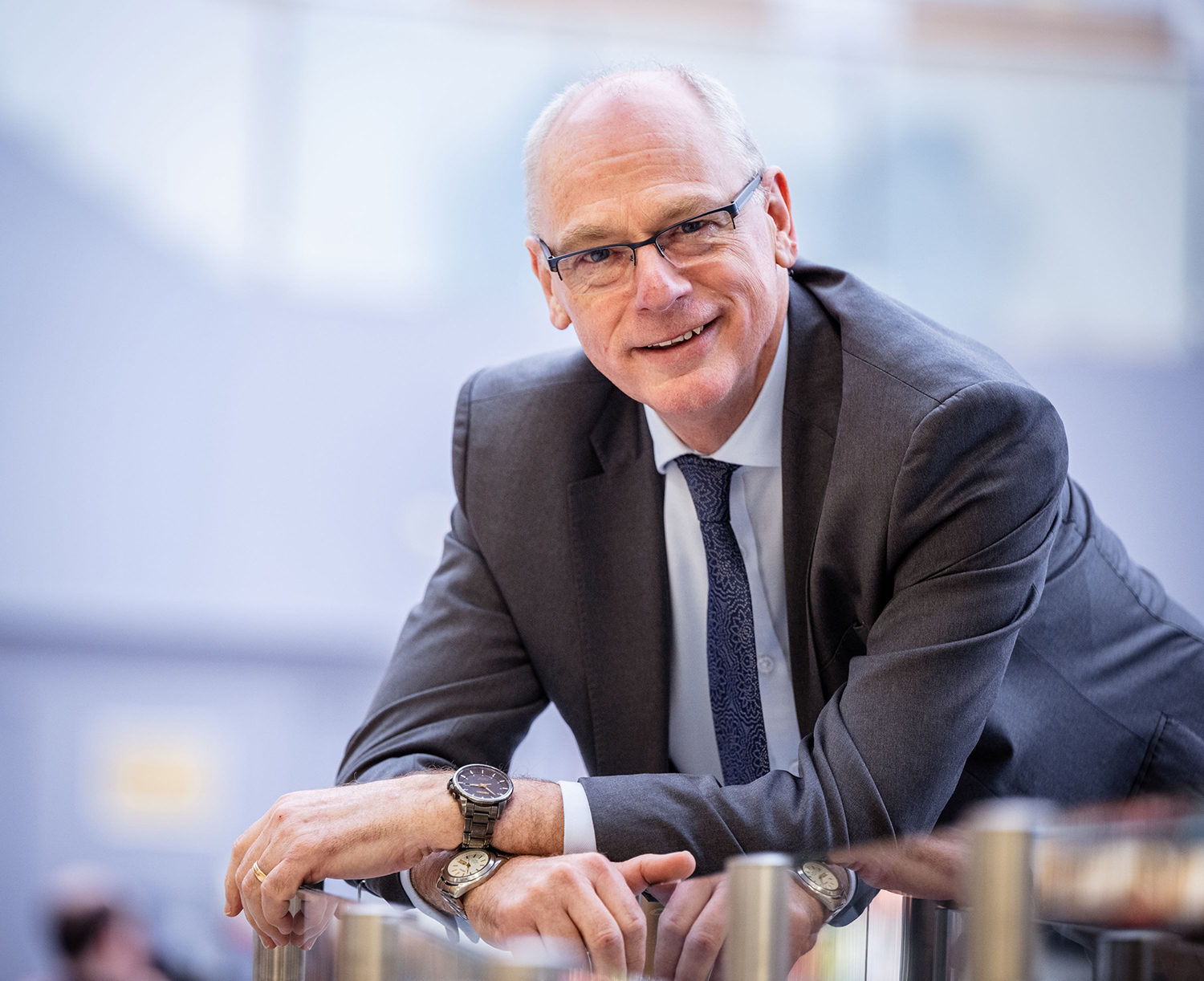
Vice-Chancellor Professor Nick Braisby. Picture credit: University of Bradford.
What is the SMI?
The English Social Mobility Index, which is compiled by London South Bank University (LSBU), has been published by the Higher Education Policy Institute (HEPI) since 2021. The University of Bradford, Aston University and The University of Wolverhampton have secured the top three places.
The annual LSBU English Social Mobility Index is published each year by the Higher Education Policy Institute and measures the social mobility of graduates.
The Index calculates the number of socio-economically disadvantaged graduates and the social distance they travel for each higher education institution in England. It combines access, continuation and outcomes measures for undergraduates for all modes of study apart from apprenticeships.
What are people saying about it?
Professor Udy Archibong, Pro-Vice-Chancellor for Equality, Diversity and Inclusion, added: “These results confirm that the University’s focus on access and outcomes is not episodic, but a sustained, mission‑driven approach. Equity, access and participation are embedded in everything we do. Our strong social mobility performance sits alongside our world-leading strengths in so many subjects, including cancer research, nanotechnology, business studies, psychology, computer science and AI. What this means in practice is clear: wherever you come from, Bradford offers the opportunity, support, and environment to realise your ambitions, enabling not only success, but genuine excellence.”
Nick Hillman OBE, Director of the Higher Education Policy Institute, said: “The Social Mobility Index matters because it shines a light on universities that help people move forward in meaningful ways, not just those that start with the most advantages. At a time when some are questioning the value of higher education, the Index shows how universities equip students with the skills and confidence that employers need and society depends on. It highlights those institutions that open doors, support students well and deliver the kind of outcomes that genuinely change lives.”
Building success
But the Index is only one part of a wider story about Bradford’s recent growth. The University has been steadily moving up UK league tables and building strength across teaching, research and innovation. It boasts a ‘triple‑accredited’ School of Management, unique programmes such as the UK’s only paramedics degree offering a paid Yorkshire Ambulance Service placement, and 77% of its research is rated world‑leading or internationally excellent.
These complement strong graduate outcomes – 91% in work or study 15 months after graduation, and 82% of those in work enter high‑skilled roles (according to the most recent Higher Education Statistics Agency figures).
The overwhelming majority of its courses are accredited by professional bodies and graduates also benefit from five years of careers support.
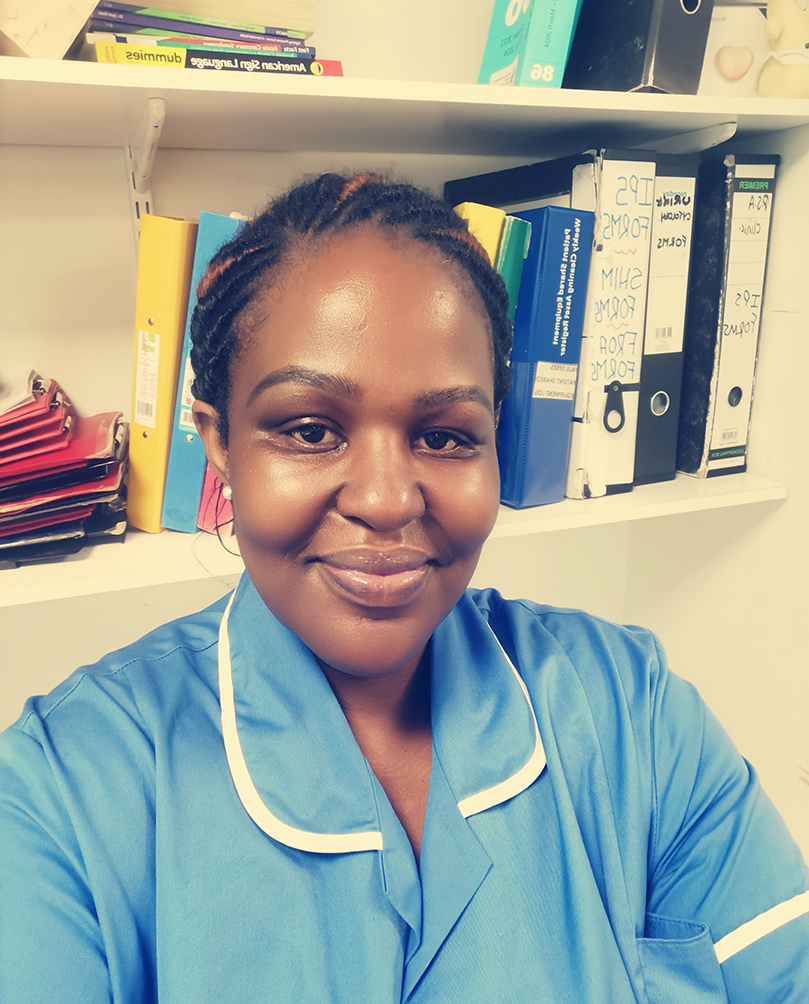
Gloria Ludlow. Picture credit: University of Bradford.
Gloria’s story
Gloria Ludlow, a University of Bradford Sanctuary Scholar, graduated with first‑class honours in Adult Nursing in December 2023, despite experiencing extraordinary hardship throughout her life.
Before arriving in the UK from Zimbabwe, she had already lost her father, brother and sister to illness, and after settling in Britain she became a victim of modern slavery for nearly 16 years, forced to work for little or no pay by several exploitative firms.
Her life changed when she found the University of Bradford’s Sanctuary Scholarship, applied through the Manuel Bravo Project, and was accepted – a moment she described as overwhelming. But during her studies she faced more tragedy: in 2023 her husband James, whom she married in 2020, died suddenly of cancer aged just 35.
Gloria said she wasn’t sure how she survived that period, but the University’s support – including academic help and counselling – helped her keep going.
She now works as a staff nurse for Leeds Teaching Hospitals NHS Trust in the urology department.
She said: “The University of Bradford helped me to get where I am today. They gave me hope and a future that I would otherwise never have had. The University was like a bridge, helping me get to the other side.”
She credits the University, her faith and wider community for helping her move from exploitation and loss to a future of stability, independence and purpose – even daring now to think about buying her own home.

Lisa Varley. Picture credit: University of Bradford.
Lisa’s story
Single mother Lisa Varley says studying at the University of Bradford has helped to fulfil her career potential.
After leaving school in 2002 following her GCSEs, Lisa entered the workplace, gaining accounting qualifications between 2015 and 2020.
Being made redundant during the pandemic proved to be a turning point. With her daughter Molly in her first year at school, Lisa decided to return to studying.
She applied through Clearing to the University of Bradford, initially completing a Foundation Year course, eventually graduating from the university’s BSc (Hons) Accounting and Finance programme in 2024.
Lisa, 40, now works full-time as a self-employed licenced bookkeeper with charities and non-profit organisations, and lives with Molly, 11.
Lisa says she received support from her university tutors and takes real-life business scenarios learned from academics into her career.
She said: “The time doing my degree and being a mum was a bit of a whirlwind. It was absolute madness for four years. It was crazy, but I quite enjoyed the craziness. What it did was push me to my absolute limit. I was pushed completely out of my comfort zone. I had no other choice but to get my head down and get on with it. It makes you a bit braver. I think that if I did that I can do anything now.
“It was about fulfilling your own potential. That was my motivation. I just wanted the graduation photograph on my wall. I have that now. I was a first-generation graduate, the first one in my family to do it. I had a career before I went to university. Doing the degree I exceeded what might have been the limit of my career at the time. My workload is full to capacity now.”