

Bradford spin-out to showcase rapid bacteria-detection technology to 150 investors
University of Bradford scientists will showcase groundbreaking bacteria-detection technology to more than 150 investors this week after securing a six-figure funding boost to accelerate its development. They are now launching a £6 million seed round to advance the technology towards market.
Spin-out company Molecular Titans Ltd, founded by Dr Tom Swift and Professor Stephen Rimmer, has been selected to present at the latest Northern Gritstone Investor Showcase in London, where some of the UK’s most promising science and technology ventures will pitch to a global network of investors.
The appearance follows the award of £150,000 through the UKRI Innovation to Commercialisation of University Research (ICURe) Venture Builder programme and a further £200,000 investment commitment from Northern Gritstone.
Molecular Titans Ltd is a University of Bradford spin-out incubated through the Bradford-Renduchintala Enterprise Ecosystem (BREE).
Enormous potential
Dr Tom Swift, Chief Executive Officer of Molecular Titans, said:
“The technology has enormous potential. In healthcare, food production and environmental monitoring, organisations are often forced to make decisions before laboratory results become available. Our ambition is to provide a much earlier indication that harmful bacteria may be present, enabling faster and better-informed decision-making.
“The support from both UKRI and Northern Gritstone will allow us to work directly with customers, undertake technical pilot projects and continue building the evidence base needed for commercial deployment.”
The company is already exploring applications with organisations operating in sectors including healthcare, food safety, industrial monitoring and air-quality management.
Artemis technology
The funding will enable the company to expand technical testing, undertake pilot projects with potential customers and further develop its platform technology, which is designed to rapidly identify harmful bacteria across healthcare, food production, water quality and environmental monitoring.
At the heart of the company’s technology is Artemis®, a family of smart polymers designed to selectively capture and concentrate bacteria and fungi. The technology is designed to help identify extremely low levels of harmful microorganisms without the delays associated with traditional culture-based testing, with potential applications across healthcare, food safety, environmental monitoring and industry.
Its founders believe its technology could significantly reduce the time required to detect potentially harmful bacterial infections, helping clinicians, manufacturers and environmental monitoring services take action sooner.
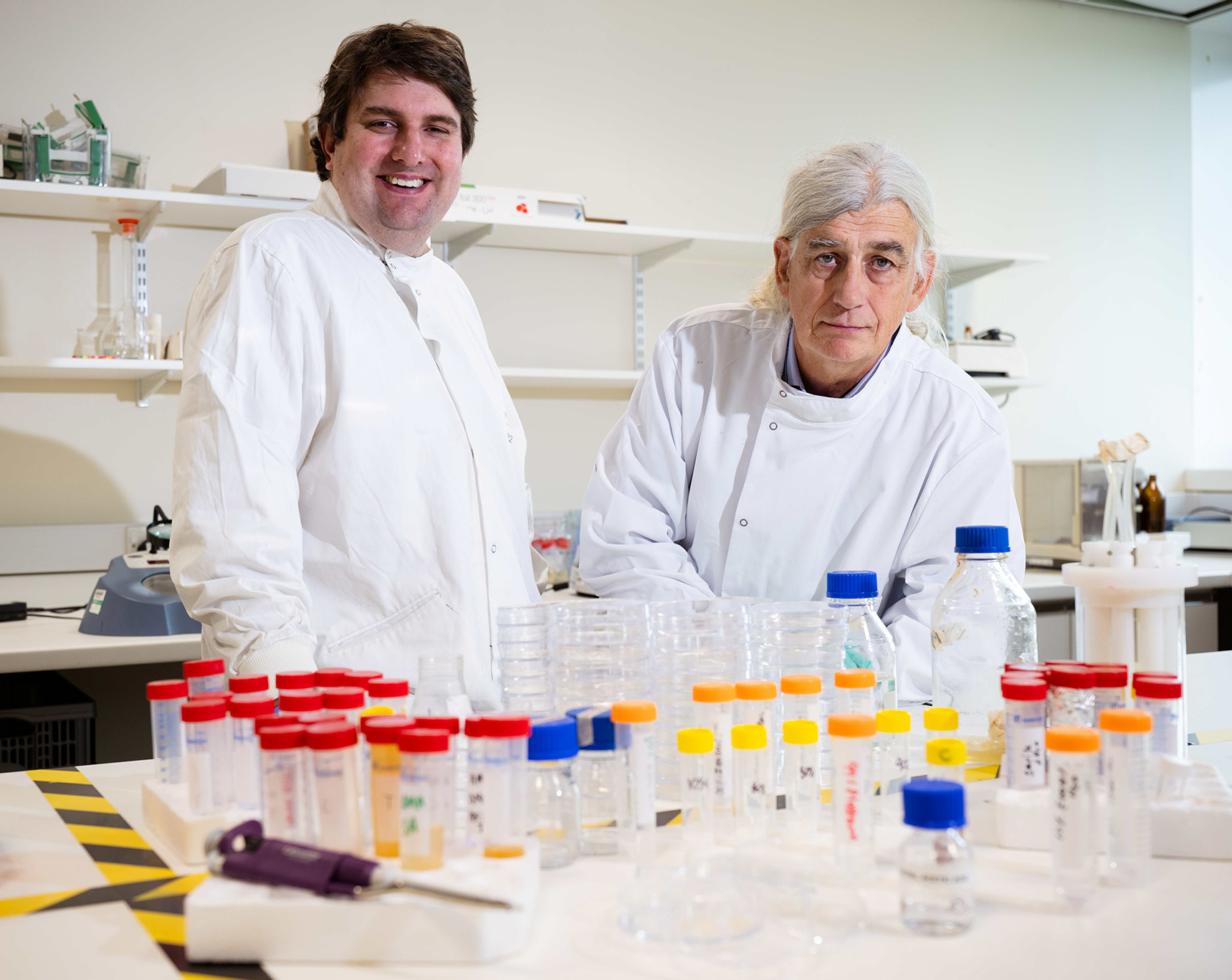
(L to R): Dr Tom Swift and Professor Stephen Rimmer.
All credits: KM Images Ltd/University of Bradford.
Detect bacteria
Northern Gritstone, which invests in science and technology businesses emerging from universities across the North of England, is expected to support the company’s next stage of growth.
Professor Stephen Rimmer, whose research underpins the technology, said:
“The polymer platform has been developed through many years of research. What excites us is the breadth of its potential applications. Whether the challenge is infection control, food safety or environmental monitoring, the ability to rapidly isolate and detect bacteria can provide valuable information far earlier than many conventional approaches.
“Once available, the Artemis technology will have a major impact in improving diagnosis and outcomes several critical clinical conditions including sepsis, as well as being an effective tool to reduce the unnecessary use of antibiotics.
“As an example, the team have already carried out pre-clinical in vivo testing for both bacterial and fungal eye infections.”
Real-world impact
Professor Sherif El-Khamisy, Pro-Vice-Chancellor for Research, Innovation and Global Engagement at the University of Bradford, said:
“Molecular Titans is an excellent example of how university research can be translated into real-world impact. By combining scientific excellence with entrepreneurial ambition, the team is developing technology with the potential to improve healthcare, strengthen industry and create economic value.
“Supporting companies like Molecular Titans is central to our vision of turning research into innovation, creating opportunities and delivering ideas that change lives.”
The investment marks the latest step in Molecular Titans’ development as it seeks to bring its technology to market and demonstrate its value across a range of commercial and public-sector applications. It was initially funded by the University’s Bradford-Renduchintala Enterprise Ecosystem.
Cover photo – image caption: (L to R): Professor Stephen Rimmer and Dr Tom Swift. All credits: KM Images Ltd/University of Bradford.