
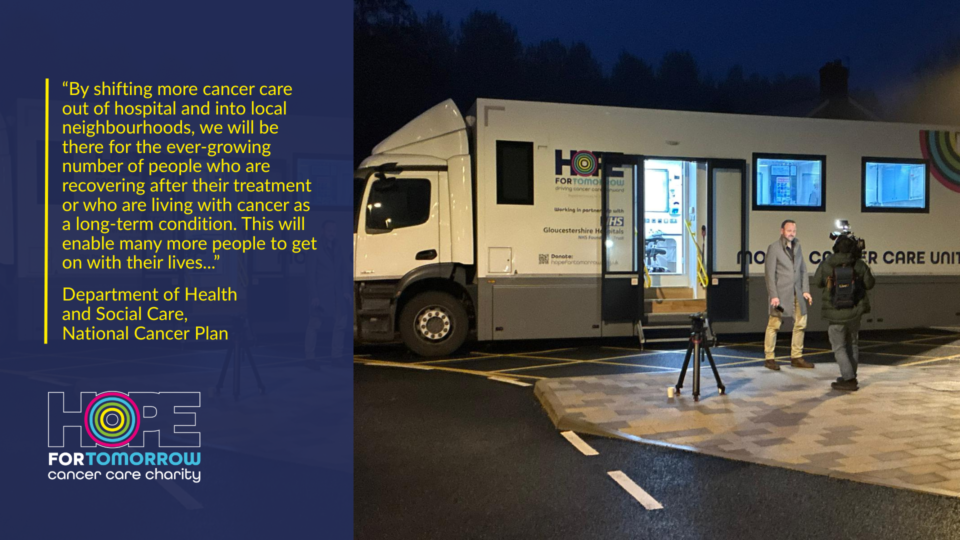
Hope for Tomorrow featured on national TV as government’s milestone cancer plan is released
Cancer care charity, Hope for Tomorrow, recently took centre stage on national TV, coinciding with the government’s landmark release of the national cancer plan.
To mark the launch on World Cancer Day, ITV’s Good Morning Britain joined us on board our Gloucestershire-based mobile cancer care unit. Viewers saw how one of our mobile cancer care units, described as a “ward on wheels” travelled from Gloucester Royal Hospital to rural Cinderford, bringing life-enhancing cancer care into the heart of communities. If you missed the segment on your screens, you can catch up here.
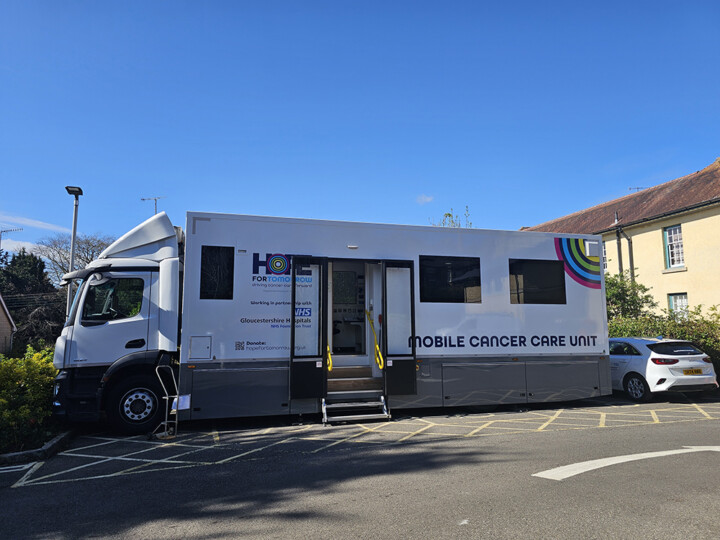
‘Helen’ Gloucestershire mobile cancer care unit
The new National Cancer Plan sets a powerful goal: from 2035, 75% of people diagnosed with cancer will survive or be living well with cancer after five or more years.
To achieve this, the plan outlines its key pillars, which include catching cancer earlier and faster, expanding screening and community testing, and investing in the latest technology to help spot cancers sooner and treat them more effectively.
There are several of these areas which align with our strategy. These include:
- Cancer care designed around patients’ lives: Giving more choice and convenience (exactly what we’ve done since launching the world’s first mobile cancer care unit in 2007!)
- Earlier detection: Scaling up screening for earlier detection and quicker access to treatment, like with our lung health assessment unit, which is bringing lung health checks to some of the most deprived and underserved communities across Greater Manchester.
- Health equity – Ensuring those in rural, deprived or underserved areas are not left behind.
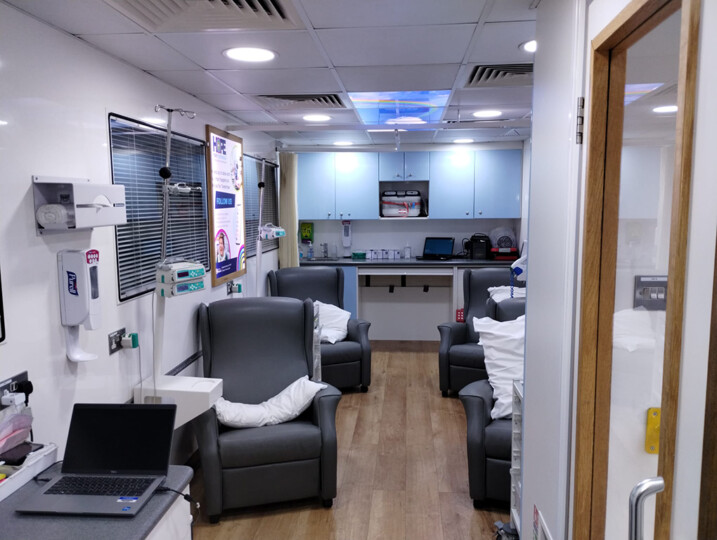
Inside a mobile cancer care unit
Everyone deserves equal access to quality cancer care, no matter where they live.
Seeing our work recognised on national TV was a proud moment for the entire team. It was a validation of the 20 years we have spent proving that cancer care doesn’t have to happen in a large, distant, overcrowded hospital – it can happen in your neighbourhood!
For more information on Hope for Tomorrow and our response to the national cancer plan, please click here