
New £3.67m Yorkshire Robotics Hub will help manufacturers bridge automation gap
New industry-led initiative aims to help manufacturers bridge the gap between interest in robotics and successful deployment
The University of Bradford is leading a £3.67 million Yorkshire Robotics Adoption Hub after securing £2.75 million in funding from Innovate UK to help manufacturers adopt robotics and automation technologies.
The Hub is designed to address one of the biggest barriers to productivity in UK industry. The 42-month programme has secured £2.75 million in grant funding and brings together the University of Bradford, West Yorkshire Manufacturing Services (WYMS), the University of Huddersfield and Olympus Technologies, alongside a wider network of manufacturers, technology partners and regional stakeholders.
Vital role
The Hub has been created in response to a growing adoption gap within UK manufacturing. While 73% of manufacturing SMEs say they intend to invest in automation, relatively few progress to implementation. The UK currently operates around 104 robots per 10,000 manufacturing employees, significantly below the global average of 177.
The Yorkshire Robotics Adoption Hub will help businesses move from initial interest through feasibility, business case development and supplier selection to full deployment. The programme aims to engage more than 300 manufacturers, deliver 80 feasibility studies and support at least 30 robotics deployments.
Professor Ben Whiteside, Principal Investigator, Director of the Institute of Digital and Sustainable Futures at the University of Bradford, said: “Yorkshire has one of the strongest manufacturing bases in the country, yet too many businesses still struggle to move from interest in robotics to successful deployment.
“The challenge isn’t that companies don’t want to automate. The challenge is that many lack the time, expertise or confidence to take the next step.
“This Hub brings together universities, manufacturers, technology providers and business support organisations to bridge that gap. By helping businesses adopt proven technologies, we can improve productivity, strengthen supply chains and support long-term economic growth across the region.
“Importantly, our ambition extends beyond Yorkshire. We want to create a model that can be replicated elsewhere, helping manufacturers across the UK benefit from robotics, automation and digital technologies.”
Professor Sherif El-Khamisy, Pro-Vice-Chancellor for Research, Innovation and Global Engagement, said: “Universities play a vital role in translating innovation into economic impact. This Hub is a powerful example of how research expertise, industry knowledge and regional collaboration can come together to solve real-world challenges, helping businesses grow, improving productivity and supporting the industries of the future.”
The project combines academic expertise in robotics, AI, digital twins, machine vision and advanced manufacturing with practical industrial experience, creating what partners believe is a unique route to adoption for manufacturing SMEs.
Professor Andrew Longstaff, Research Director at the University of Huddersfield’s Centre for Precision Technologies and Hub lead for the University, commented: “Yorkshire’s manufacturers have enormous potential to benefit from robotics and automation, but many need support to identify the right technologies and implement them successfully.
“The Yorkshire Robotics Adoption Hub will bring together expertise from industry and academia to help businesses make informed decisions and adopt solutions with confidence. By accelerating the uptake of proven robotics and automation technologies, we can strengthen productivity, resilience, and competitiveness across the region. In doing so, we aim to create lasting impact that extends beyond Yorkshire and contributes to the future growth of manufacturing across the UK.”
How will it work?
The Hub is grounded in real industrial demand. Major manufacturers including Myton Food Group and Groupe Atlantic will provide live use cases, access to supply chains of over 300 regional suppliers, and routes to scale adoption, ensuring a demand-led programme embedded in operational environments.
Delivery follows a stage-gated model, progressing SMEs from engagement through feasibility to deployment, supported by demonstrators, ROI modelling and hands-on technical input. The programme will engage over 300 manufacturers, deliver 80 feasibility studies and enable at least 30 deployments, generating economic impact exceeding the grant while establishing a sustained adoption pipeline.
The consortium is supported by regional and national stakeholders, including West Yorkshire Combined Authority (WYCA) and Made Smarter Yorkshire &Humber, confirming strategic alignment and market demand.
The Hub will operate across Yorkshire, focused on the M62 and M1/A1 industrial corridors, where manufacturing activity is most concentrated. A central base at WYMS will be complemented by a distributed network of demonstrators and ‘lighthouse sites’, providing regional reach without additional infrastructure.
Adam Swallow, Managing Director of Olympus Technologies, a key partner in the project, said: “We are passionate about supporting SMEs’ aspirations to grow their businesses through robotic automation. This Hub provides a step change in our ability to get alongside businesses, address their concerns, and increase the number of businesses adopting automation.”
The hub was launched at a roundtable event at the University of Lincoln following a round table discussion led by Minister for AI, the Rt Hon Kanishka MP. Narayan
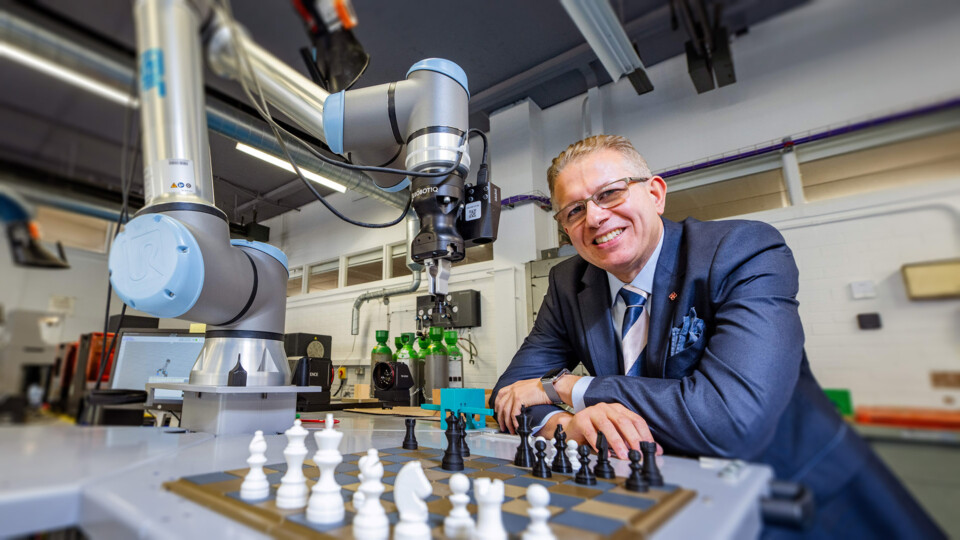
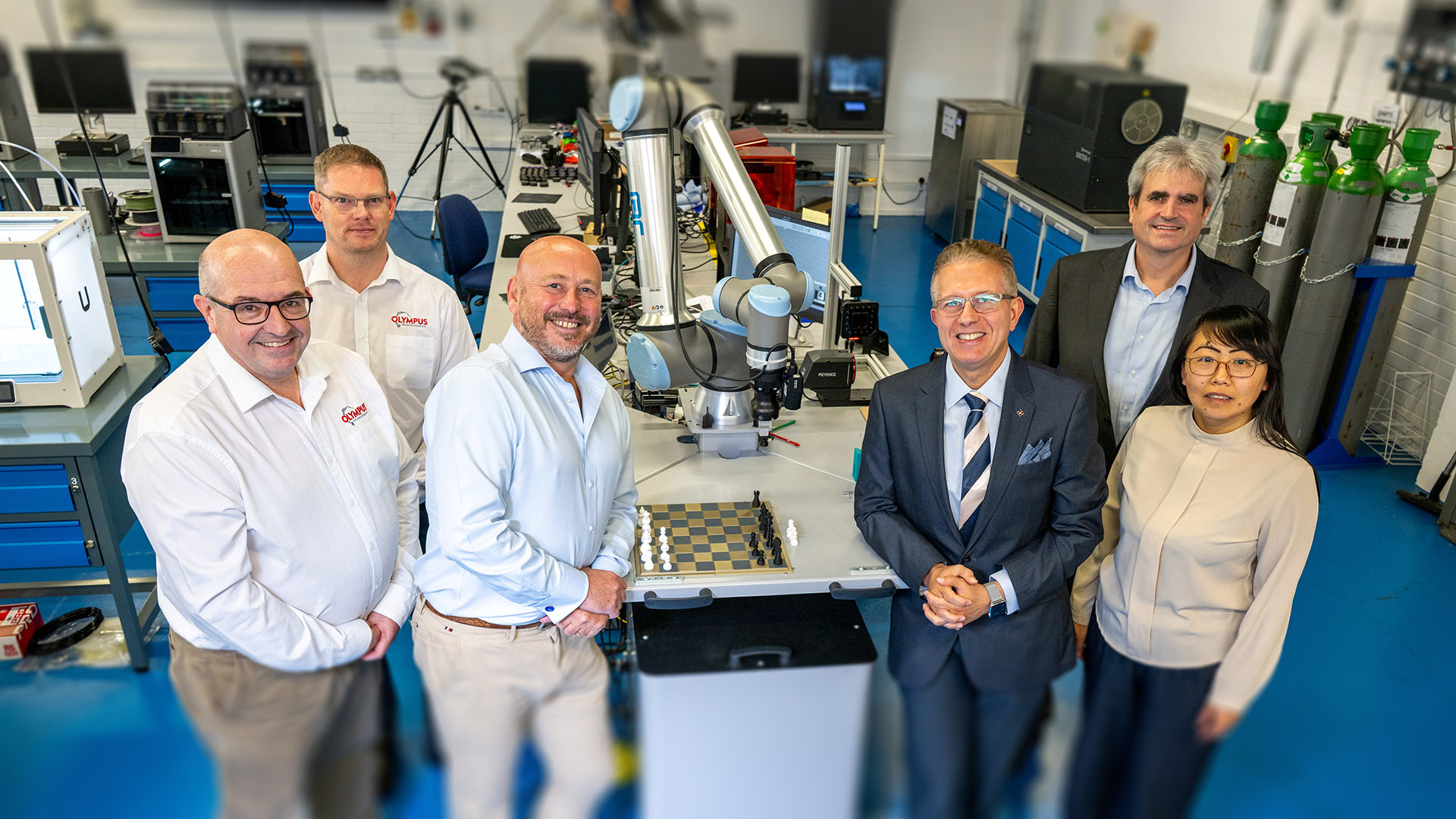
Images: 1) Professor Sherif El-Khamisy, Pro-Vice-Chancellor of Research & Innovation at the University of Bradford. 2) From left: Adam Swallow, Managing Director of Olympus Technologies and Gavin Jamieson (Olympus Technologies), Mark Lewis, Chief Executive of West Yorkshire Manufacturing Services, Professor Sherif El-Khamisy, Professor Ben Whiteside and Jing Li from the University of Bradford. Credits: University of Bradford.