
Bradford experts warn of emerging ‘mind weapon’ threat at global chemical weapons summit
Experts from the University of Bradford are urging governments to strengthen safeguards against the misuse of neuroscience, related chemical and life sciences and technologies including artificial intelligence as delegates gather this week for a major international summit on chemical weapons.
Professor Malcolm Dando and Dr Michael Crowley are using the Thirty-first Session of the Conference of the States Parties to the Chemical Weapons Convention (CSP-31), taking place in The Hague from 23-27 November, to warn of growing risks posed by advances in neuroscience, pharmaceuticals and AI.
The researchers argue that scientific breakthroughs that could transform healthcare could also be exploited to develop a new generation of so-called “central nervous system-acting” weapons designed to manipulate behaviour or incapacitate targets.
Global warning
In a policy paper distributed to delegates attending the conference, the pair call for stronger international monitoring of emerging technologies and greater action by the Organisation for the Prohibition of Chemical Weapons (OPCW).
In the paper, the researchers warn that scientific developments offering huge benefits for healthcare could also be exploited by states seeking new forms of chemical weapon. They argue that rapid advances in brain science are dramatically increasing knowledge of how the human nervous system functions, creating opportunities for both medical breakthroughs and potential misuse.
The authors are calling on the Organisation for the Prohibition of Chemical Weapons (OPCW) and States Parties to the Chemical Weapons Convention to strengthen monitoring of emerging technologies and improve safeguards against the weaponisation of neuroscience and related chemical and life sciences.
Professor Malcolm Dando, Emeritus Professor at the University of Bradford, said: “Advances in neuroscience have enormous potential to improve human health and wellbeing, but like many scientific developments they can also be misused.
“Our concern is that the international community must remain vigilant and ensure that scientific progress is not diverted towards the development of new forms of chemical weapon.”
Call for oversight
Dr Michael Crowley, Honorary Visiting Senior Research Fellow at the University of Bradford, said: “The chemical and life sciences are advancing at a remarkable pace. We need robust international oversight to ensure these developments are used to benefit humanity rather than undermine international security and human rights.
“The Chemical Weapons Convention has a vital role to play in preventing the development of neuro-weapons and broader misuse of these technologies for warfare and repression.”
The pair made national and international headlines in November last year, with stories in The Guardian, The Sun Online, New York Post, and many other outlets, following the publication of their most recent book Preventing Weaponization of CNS-acting Chemicals: A Holistic Arms Control Analysis (published by the Royal Society of Chemistry).
The paper, Preventing CNS-acting chemical agent weapons and misuse of neuroscience: Strengthening action under the Chemical Weapons Convention, recommends stronger scientific monitoring, enhanced international cooperation and the establishment of a specialist working group to assess emerging risks.
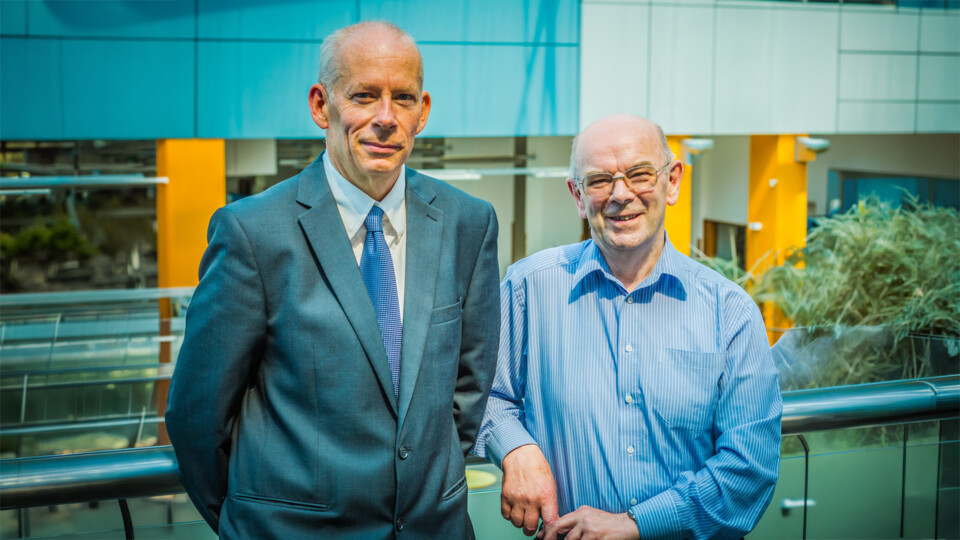
Cover photo – image: Dr Michael Crowley and Professor Malcolm Dando, from the University of Bradford. All credits: University of Bradford.