
How US-Iran war makes a mockery of climate change targets
Has the world just avoided a major environmental catastrophe in the Middle East?
A direct missile strike on the South Pars refinery in Iran would release more than double the amount of CO2 the UK generates in a year into the atmosphere – that’s according to University of Bradford pollution expert Dr Nejat Rahmanian, who used to work in the Middle East oil fields.
As the world breathes a collective sigh of relief following a pause in the US–Iran war, there is a sense that catastrophe may – at least for now – have been avoided. But while attention has focused on the human toll, one expect warns that renewed fighting could result in devastating consequences for the environment, wildlife and the global climate.
Dr Nejat Rahmanian, who worked as a process engineer on the South Pars Gas Field from 1997 to 2005, said the environmental consequences of any escalation would be “significant and global.”
He said: “If there is a direct hit on any kind of refinery, you are not just destroying the structure itself but releasing whatever chemicals, including CO2 and toxic gases, are stored there.”
Iran produces around 900 million tonnes of CO₂ a year – roughly double the UK’s emissions. Dr Rahmanian said if a single refinery such as South Pars were destroyed, the release could be equivalent to another 1,000 million tonnes of CO₂ entering the atmosphere immediately.

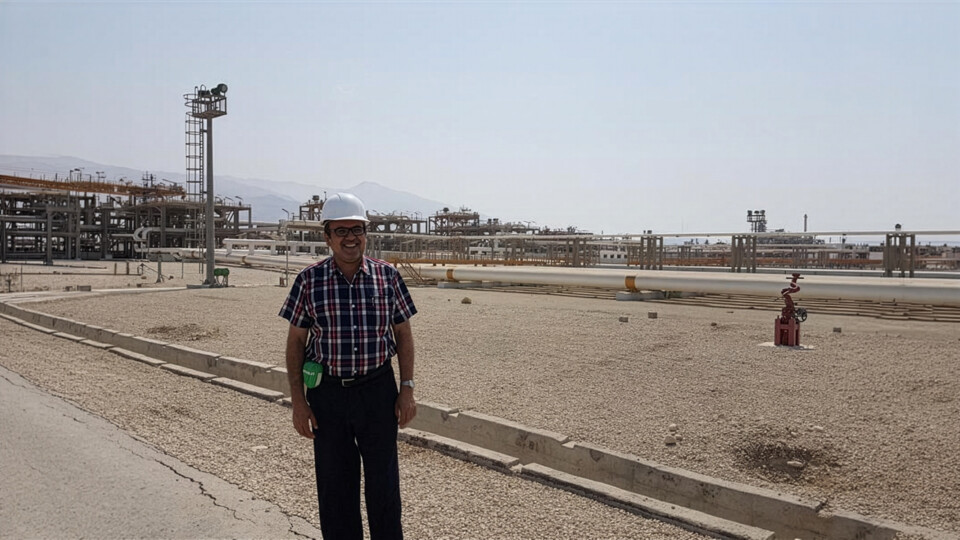
Dr Nejat Rahmanian, engineer and former South Pars gas field worker at University of Bradford.
Beyond borders
He added that pollution released in such an event would spread far beyond Iran’s borders.
“Gases do not respect borders,” he said. “The pollution can go anywhere. It can easily rise into the stratosphere and travel around the world. It would pose a major risk not just to people but to ecosystems, animals and especially to marine life, as so many refineries are on the coast.”
Dr Rahmanian is an Associate Professor in Chemical and Petroleum Engineering and has led the MSc in Advanced Chemical and Petroleum Engineering since 2015.
During the first Gulf War, while a student at the Iranian Petroleum Technology University – about 100km north of Iraq – he recalled witnessing the environmental fallout of burning oil fields first‑hand.
“I remember walking outside in a white shirt after Saddam Hussein set fire to the oil fields in Kuwait. It began to rain and my shirt turned black. That was not a normal cloud. The same thing could happen again if refineries or oil fields are targeted.”
Sour gas
He also highlighted the risk posed by ‘sour gas’ – unrefined oil and gas – which contains high levels of hydrogen sulphide.
“South Pars removes around 220 tonnes of hydrogen sulphide every day. If the refinery was to be hit, all of that – along with other chemicals –would be released into the environment. The effects would be similar to a chemical weapon.”
He warned that strikes near South Pars could also threaten the Naybandan Wildlife Sanctuary in South Khorasan, Iran’s largest sanctuary and a crucial refuge for the critically endangered Asiatic cheetah.
Nuclear risk
Dr Rahmanian acontinued that were Iran’s nuclear power plant at Bushehr ever to become a target, the effects would be dire.
“Any radioactive emissions would permanently contaminate water in the whole of the Gulf. There would also be severe damage to marine life.
He added: “No-one is talking about the environmental effects of the war. We all pay significant taxes to reduce emissions and protect the environment, yet here we have a situation where one strike has the potential to cause an environmental disaster.
“Such impacts also have the potential to undermine the global commitment to tackling climate change, because if something like this does happen, some countries might rightly ask ‘what’s the point?’”